Norwood scale, stage 1
Norwood 1
No meaningful recession. A full, juvenile or adolescent hairline with no visible thinning at the temples or crown.
- Balding under the scale
- No
- Typical age
- Teens to mid-20s, though some men keep a stage 1 hairline into their 40s and beyond.
- Estimated grafts (first session)
- No transplant needed
- Transplant candidacy
- Not needed. There is no hair loss to restore at this stage.
What Norwood 1 looks like
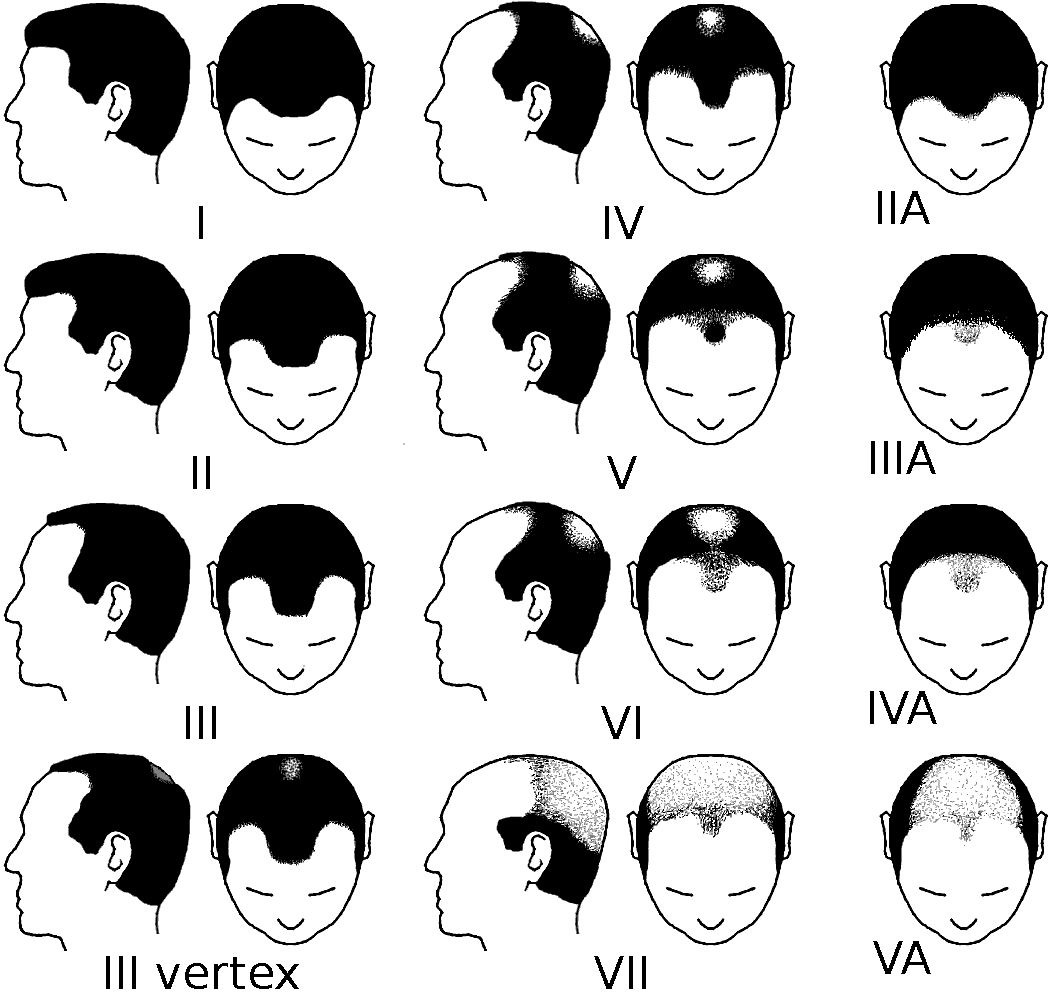
Norwood 1 is the control stage of the scale: a hairline that sits low on the forehead with no recession at the temples and no thinning at the crown. Many teenagers and men in their early twenties are here, and some men stay here for life.
A Norwood 1 hairline is often straight or gently rounded. It can still look slightly uneven, because almost no one has a perfectly symmetrical hairline. Unevenness alone does not move you to stage 2.
How common is Norwood 1?
Most men start here. Around a quarter of men who develop pattern hair loss start losing hair before 21, according to the American Hair Loss Association, so stage 1 is not guaranteed to last.
What people at Norwood 1 typically do next
- Nothing is needed. There is no hair loss to treat.
- If you want a baseline, take a photo of your hairline in consistent lighting once a year so you can spot change early.
These are the options people at this stage commonly weigh, not a recommendation. A dermatologist or hair restoration surgeon can assess your donor area, hair calibre and the cause of your hair loss.
All Norwood stages
Not sure which is yours? Use the stage finder.
Where Norwood 1 sits on the full chart
Norwood 1: frequently asked questions
- Is Norwood 1 normal?
- Yes. Norwood 1 is a full hairline with no recession. It is the starting point of the scale, not a stage of hair loss.
- Can you have a Norwood 1 hairline at 30?
- Yes. Plenty of men keep a stage 1 hairline into their 30s and 40s. The scale describes a pattern, not a timeline, and not every man progresses along it.
- Does an uneven hairline mean I am past Norwood 1?
- Not on its own. Slight asymmetry is normal. Stage 2 is defined by recession at both temples, not by one side sitting a few millimetres higher than the other.
Sources
Stage definitions follow Norwood's 1975 classification. Graft estimates are typical clinic planning figures for a first session and vary with hair calibre, donor density and hairline design.
How Bald is an information site, not a clinic. Nothing here is medical advice and we do not sell procedures or medication. Figures are estimates with sources listed on our methodology page. Talk to a dermatologist or hair restoration surgeon before treatment.