Norwood scale, stage 2
Norwood 2
Slight, symmetrical recession at the temples. Often a "mature hairline" rather than the start of balding.
- Balding under the scale
- No
- Typical age
- Late teens to early 30s. The most common stage for men in their 20s.
- Estimated grafts (first session)
- 500 to 1,500
Estimate cost for 500 to 1,500 grafts → - Transplant candidacy
- Rarely offered. Most surgeons wait for the pattern to stabilise before operating this early.
What Norwood 2 looks like
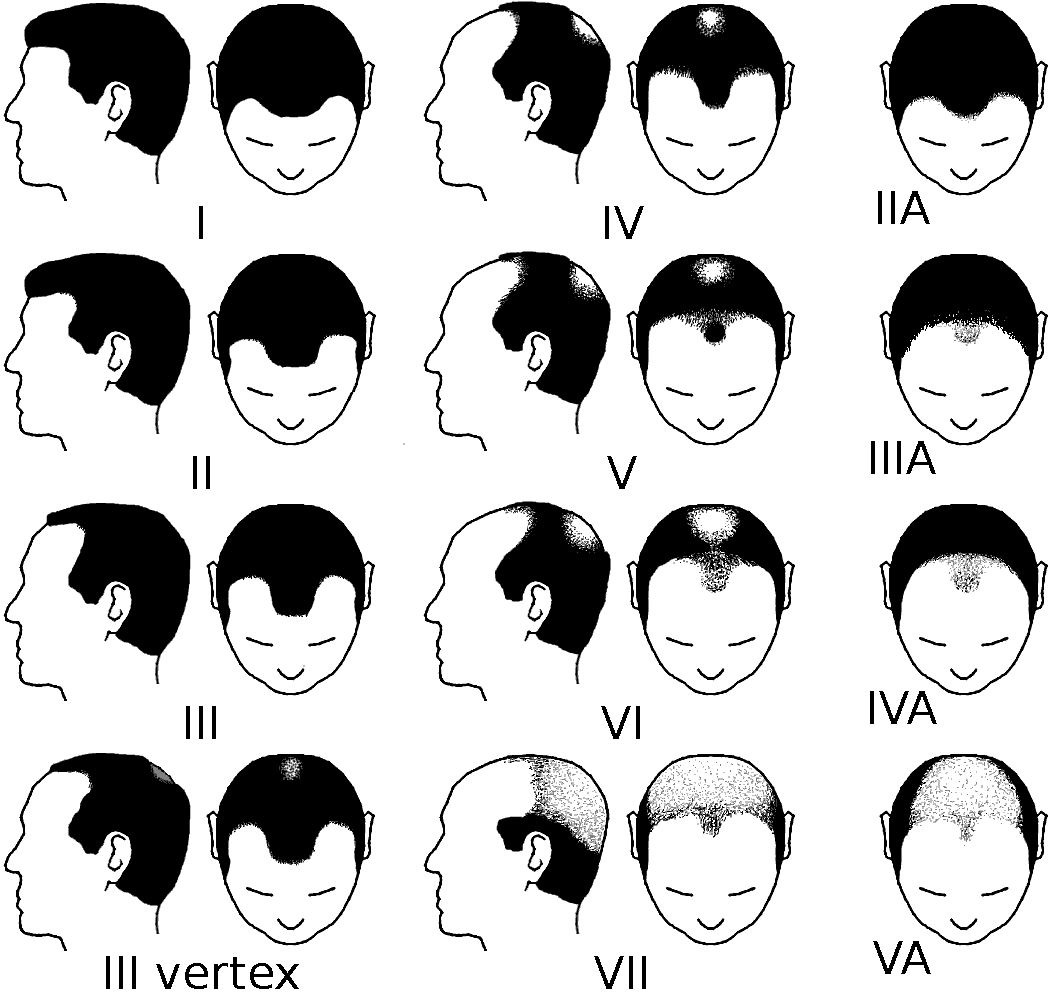
Norwood 2 is mild recession at both temples, giving the hairline a shallow M shape. The frontal hairline moves back by roughly a centimetre or so, but the central forelock stays put and the crown is unaffected.
This is the stage most often confused with balding. A large share of men develop a "mature hairline" in their late teens and twenties, which looks exactly like Norwood 2 and then stops. The difference is whether it keeps moving: a mature hairline settles, a receding one continues to stage 3.
How common is Norwood 2?
Very common. Most men who will ever bald pass through stage 2, but many men who will never bald also sit here permanently.
What people at Norwood 2 typically do next
- Watch for change over 6 to 12 months with photos in the same light. A stable Norwood 2 is usually a mature hairline.
- If it is progressing, this is the stage where people most often start finasteride or minoxidil, because both work best at preserving hair you still have.
- A transplant is rarely recommended at stage 2. Surgeons generally want to see a stable pattern first, and filling temples at 22 can look unnatural if the hair behind them later recedes.
These are the options people at this stage commonly weigh, not a recommendation. A dermatologist or hair restoration surgeon can assess your donor area, hair calibre and the cause of your hair loss.
All Norwood stages
Not sure which is yours? Use the stage finder.
Where Norwood 2 sits on the full chart
Related guides
What people at Norwood 2 most often read next.
- Ketoconazole Shampoo Hair Loss: What the Small Studies ShowKetoconazole shampoo for hair loss rests on 81 men who used it alone and no placebo-controlled trial. What each study measured, and the side-effect rates.
- Dutasteride vs Finasteride: What the Trials Actually ShowDutasteride vs finasteride: the head-to-head trials, how much extra hair the stronger drug buys, and the trade-off nobody puts in writing.
- Derma Roller Hair Growth: What the Trials Actually UsedThe best-known derma roller hair results came from 1.5 mm clinic sessions, not home rollers. What each trial used, the largest null trial and side effects.
Norwood 2: frequently asked questions
- Is Norwood 2 balding?
- Not by the scale. Norwood 2 is classed as minor recession, and many men at this stage have a mature hairline that never progresses. Stage 3 is the first stage Norwood defined as balding.
- Mature hairline vs receding hairline: how do I tell?
- Time. A mature hairline moves back about 1 to 1.5 cm from the juvenile position, usually in the late teens or twenties, then stops. A receding hairline keeps going, the temples deepen, and the M shape sharpens. If your hairline has not changed in a year, it is most likely mature.
- How many grafts for Norwood 2?
- Clinics typically quote 500 to 1,500 grafts to restore the temples at Norwood 2. Most surgeons prefer to wait until the pattern is stable before operating this early.
- Should I take finasteride at Norwood 2?
- That is a question for a doctor, but it is the stage at which treatment is most often started, because finasteride and minoxidil are much better at keeping hair than regrowing it. See our treatment comparison for what the evidence shows.
Sources
Stage definitions follow Norwood's 1975 classification. Graft estimates are typical clinic planning figures for a first session and vary with hair calibre, donor density and hairline design.
How Bald is an information site, not a clinic. Nothing here is medical advice and we do not sell procedures or medication. Figures are estimates with sources listed on our methodology page. Talk to a dermatologist or hair restoration surgeon before treatment.