Oral Minoxidil for Hair Loss: Doses, Results and Risks
Oral minoxidil is prescribed off label for hair loss at 0.25 to 5 mg. What the trials found, the dose trade-off, and what the heart data actually shows.

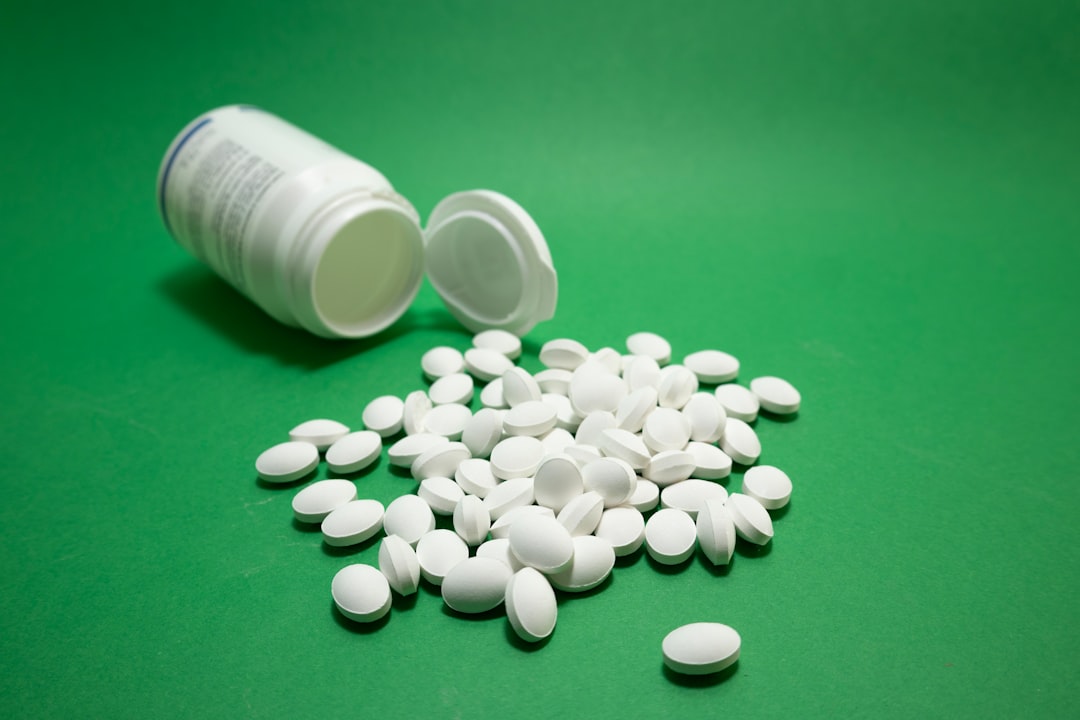
Does oral minoxidil work for hair loss?
Yes, for a substantial minority of people. A 2025 meta-analysis pooling 27 studies and 2,933 patients found roughly 47% improved and about 35% improved substantially at doses of 0.25 to 5 mg a day. Oral minoxidil is not approved for hair loss anywhere; every prescription is off label, and the benefit rises with the dose at the same time as the side effects do.
Oral minoxidil is the same molecule as the topical solution you can buy in a supermarket, taken as a tablet instead of rubbed into the scalp. It was approved decades ago as a blood pressure drug at 10 to 40 mg a day. What dermatologists now prescribe for hair loss is a fraction of that, usually 0.25 to 5 mg, which is why the literature calls it low dose oral minoxidil, or LDOM.
The reason it has spread so fast is boring and human: people stop applying topical minoxidil. A tablet takes two seconds. A twice-daily solution takes months of discipline, leaves residue in your hair, and most people quietly abandon it, whether they bought the brand or the cheap generic. The 2025 expert consensus in the Journal of the American Academy of Dermatology names this directly, describing topical minoxidil's usefulness as "limited due to the need for at least daily application" (Olsen et al, J Am Acad Dermatol 2025).
That same paper is blunt about the other half: oral minoxidil has been adopted "without any standard recommended best practices". This guide covers what the published evidence actually supports, where the numbers get uncomfortable, and the questions worth asking before anyone writes a prescription.
Table of contents
- What oral minoxidil is and why it is off label
- Does oral minoxidil work? What the trials found
- Oral minoxidil vs topical minoxidil
- Oral minoxidil dosage: the trade-off in one table
- Oral minoxidil side effects and how often they happen
- The heart question, answered honestly
- Three things people get wrong about oral minoxidil
- What it costs and what it does not replace
- What to ask before starting
What oral minoxidil is and why it is off label
Oral minoxidil is a potassium channel opener that was developed as an antihypertensive, and hair growth was its famous side effect rather than its purpose. The FDA label for minoxidil tablets covers severe hypertension only, at doses starting around 5 mg and running to 100 mg a day. Nobody has ever run the trials needed to license it for pattern hair loss, and no regulator has approved it for that use.
Off label does not mean improvised. It means a licensed drug is being used for a condition outside its approved indication, which is legal and common in dermatology. It does mean the safety monitoring built into an approved indication is not there, and that the dosing conventions come from published series and expert consensus rather than from a regulator.
Minoxidil works on the hair cycle rather than on hormones. It lengthens the anagen (growth) phase, and the ISHRS notes that the exact mechanism "is still not fully understood" beyond that, with increased blood flow and growth factor stimulation as contributing effects. This matters more than it sounds: minoxidil does nothing about dihydrotestosterone, the hormone driving male pattern hair loss. It grows hair against the current rather than turning the current off.
If you are not sure how far your own pattern has progressed, the Norwood stage finder is the standard way to place it, and the stage matters for what treatment is usually offered.
Does oral minoxidil work? What the trials found
The pooled evidence says yes for roughly half of users, with wide uncertainty. A 2025 single-arm meta-analysis covering 27 studies and 2,933 patients found 47% (95% CI 38 to 55) improved, 35% (95% CI 22 to 49) improved substantially, and 26% (95% CI 16 to 37) stayed stable. The authors concluded benefit was clearest "at doses exceeding 1 mg".
Those confidence intervals are wide for a reason. Seventeen of the 27 studies were single-arm, meaning there was no control group and no way to separate the drug from regression to the mean, better photography or the natural fluctuation of a slow disease. Ten were randomised. That is a real evidence base, but it is not the kind of evidence base finasteride has.
The measurement point matters too. These are hair counts and investigator gradings at six months, not the impression in a bathroom mirror. Minoxidil in any form typically causes a shed in the first two to eight weeks as follicles are pushed out of the resting phase into a new growth phase, so the first visible change is often more hair in the drain, not less.
Oral minoxidil vs topical minoxidil
Only one randomised controlled trial has put them head to head, and it did not find a winner. Asilian et al (J Cosmet Dermatol 2024) randomised 65 patients to 5% topical solution or 1 mg oral minoxidil for six months. Both groups improved hair diameter significantly (p < 0.001). The difference between the groups was not significant. Photographic hair density improved significantly at three measured points in the topical group and at none in the oral group, though again the between-group difference did not reach significance. Over 60% of each group said they were satisfied.
The authors' conclusion is worth quoting in full because it is the opposite of what most pages on this topic imply: "Although topical minoxidil has a better overall therapeutic effect than 1 mg oral minoxidil, the difference between the two groups was not significant."
For context on what topical achieves in a proper trial, the reference study is Olsen et al (J Am Acad Dermatol 2002), a 48-week, double-blind, placebo-controlled trial in 393 men. It found 5% solution clearly superior to both 2% and placebo, with 45% more hair regrowth than 2% at week 48, and no evidence of systemic effects.
Note which topical that trial used. The 5% solution and the 5% foam have never been compared to each other, so anyone reasoning from the solution's trial data to a foam they actually bought is making an assumption rather than reading a result, and we set out how large that gap is in minoxidil foam vs solution. The choice still matters for people considering the tablet, because a scalp reaction to the vehicle is one of the more common reasons for moving off topical treatment in the first place.
So the honest comparison is not strength. It is these three things:
| Topical 5% | Oral, 1 to 5 mg | |
|---|---|---|
| Regulatory status | Approved for pattern hair loss, over the counter | Off label everywhere |
| Effort | Twice daily application, indefinitely | One tablet daily |
| Where side effects land | Mostly the scalp: itching, irritation, dryness | Systemic: body hair, fluid, heart rate |
| Head-to-head evidence | One RCT, no significant difference between them | Same RCT |
| Works if the scalp enzyme is low | Often not | Plausibly better, not proven |
That last row is the one people care about most and the one with the least evidence. Topical minoxidil has to be converted in the scalp to minoxidil sulfate by the enzyme sulfotransferase, and follicular activity of that enzyme predicts response (Pietrauszka and Bergler-Czop, Postepy Dermatol Alergol 2022). The theory that a tablet routes around a low-activity scalp by converting elsewhere in the body is biologically reasonable and widely repeated. It has not been demonstrated in a trial of topical non-responders. Treat it as a hypothesis your dermatologist may find persuasive, not as a finding.
Oral minoxidil dosage: the trade-off in one table
Doses in the published literature run from 0.25 mg to 5 mg a day, with women generally at the low end and men more often at 2.5 to 5 mg. The useful question is not "what is the dose" but "what does each extra milligram buy and cost", and a 2022 meta-regression in Skin Appendage Disorders pooling six trials answered exactly that at six months.
| Per 1 mg increase in daily dose | Effect | p value |
|---|---|---|
| Total hair density | +47.1 hairs/cm² | 0.0071 |
| Terminal hair density | +9.14 hairs/cm² | 0.0014 |
| Hair diameter | +1.39 micrometres | 0.0130 |
| Risk of hypertrichosis | +17.85% | 0.0057 |
| Risk of a cardiovascular event | +4.76% | 0.00382 |
Both columns move together. That is the entire clinical decision in five rows, and it is why dermatologists tend to start at 0.25 to 1 mg and titrate rather than opening at 5 mg. The cardiovascular events counted in that analysis were hypotension, oedema, increased heart rate, palpitations and abnormal ECG findings, not heart attacks.
Nobody can tell you your personal number from a table. What the table does establish is that anyone quoting an efficacy figure for oral minoxidil without naming the dose is quoting a meaningless number.
Oral minoxidil side effects and how often they happen
The best safety data is a retrospective multicentre study of 1,404 patients treated with low dose oral minoxidil for at least three months, published in the Journal of the American Academy of Dermatology in 2021. The cohort was 943 women and 461 men, mean age 43.
| Side effect | Rate | Led to stopping |
|---|---|---|
| Hypertrichosis (unwanted body and facial hair) | 15.1% | 0.5% |
| Lightheadedness | 1.7% | |
| Fluid retention | 1.3% | |
| Tachycardia (fast heart rate) | 0.9% | |
| Headache | 0.4% | |
| Periorbital oedema (puffy eyes) | 0.3% | |
| Insomnia | 0.2% | |
| Any systemic effect leading to discontinuation | 1.2% |
No life-threatening adverse effects were observed in that cohort. Pooled figures from the 2025 meta-analysis run higher, with a combined adverse event rate around 27% and hypertrichosis around 35%, which reflects different study populations and different thresholds for recording a symptom rather than a contradiction.
Hypertrichosis is the headline and it is under-communicated. Roughly one in six people grow noticeable extra hair somewhere they did not want it, most often the face, forearms and back. It is dose dependent, it reverses when the drug is stopped, and for a meaningful number of patients it is the deciding factor rather than a footnote. The ISHRS lists palpitations, dizziness, low blood pressure, chest pain, headaches and leg swelling as the systemic profile, and advises caution in older patients and anyone with a cardiac history.
The topical form lands somewhere else entirely, mostly on the scalp, and its rates come from placebo-controlled trials rather than retrospective cohorts. Our guide to minoxidil side effects sets the two profiles side by side and separates trial incidence from post-marketing reports.
The heart question, answered honestly
Minoxidil tablets carry a boxed warning, the strongest warning the FDA issues. The label states that minoxidil "can cause pericardial effusion, occasionally progressing to tamponade, and angina pectoris may be exacerbated", and that it should be reserved for hypertensive patients who have not responded to other drugs. Pericardial effusion, fluid collecting around the heart, was seen in about 3% of treated patients in the hypertension population, at doses many times higher than any hair loss dose.
The reassuring version of this, repeated on most hair loss sites, is that the warning belongs to blood pressure doses and does not apply to 1 mg. The evidence is more interesting than that. A 2024 analysis of the FDA Adverse Event Reporting System looked specifically for pericardial effusion reports at low doses and found a disproportionality signal at every dose band tested:
| Dose band | Reports | Reporting odds ratio (95% CI) |
|---|---|---|
| ≤1.25 mg | 1 | 16.41 (2.29 to 117.37) |
| ≤2.5 mg | 6 | 13.30 (5.96 to 29.68) |
| ≤5 mg | 11 | 18.44 (10.18 to 33.38) |
| ≤10 mg | 19 | 19.57 (12.46 to 30.75) |
Read that table carefully, because it is easy to misuse in both directions. A reporting odds ratio is not an incidence rate. It says that among adverse event reports involving this drug, pericardial effusion appears more often than chance would predict. It cannot tell you your risk, because nobody knows how many people are taking the drug, and reporting is voluntary and biased toward the dramatic. The raw counts are tiny: one report at the lowest band, nineteen at the highest.
Two findings from that paper are more actionable than the headline ratio. Association with life-threatening outcomes appeared only in the ≤10 mg band. And within the ≤2.5 mg band, the signal was roughly nine times stronger in patients with existing cardiac impairment (ROR 49.42) than in those without (ROR 5.34). The authors recommend staying at or below 5 mg a day and having cardiac patients evaluated by a cardiologist before starting.
The honest summary is neither "it is a blood pressure drug, be afraid" nor "low doses are completely safe". It is that serious cardiac events at hair loss doses are rare enough that a large safety cohort of 1,404 patients recorded none, that a real reporting signal exists anyway, and that having a heart condition changes the calculation substantially.
Three things people get wrong about oral minoxidil
"Oral is the stronger version." The only randomised head-to-head trial found no significant difference between 1 mg oral and 5% topical, and the point estimates favoured topical on photographic density (Asilian et al, J Cosmet Dermatol 2024). Oral minoxidil's advantage is adherence and reaching the whole scalp evenly, not raw potency at low doses.
"Hypertrichosis is a rare side effect." At 15.1% it is by a wide margin the most common one, roughly nine times more common than the next entry on the list. Any page listing it after dizziness has the order backwards.
"It replaces finasteride." It does not touch DHT. Minoxidil grows hair while the hormonal process that is shrinking follicles continues underneath. Most treatment plans for male pattern loss pair a growth stimulant with a DHT blocker for that reason, which is a separate decision covered in our comparison of dutasteride and finasteride and in the evidence on finasteride side effects.
What it costs and what it does not replace
Generic minoxidil tablets are cheap, roughly $10 to $30 a month at US pharmacies with a discount card, because the patent expired decades ago and the tablets were never priced as a cosmetic product. The consultation to get the prescription usually costs more than the first year of tablets.
Cheap is not the same as sufficient. Both minoxidil and DHT blockers are maintenance drugs: stop them and the gained hair goes, typically within months. Neither restores a hairline that has already been lost for years, which is where surgery enters the conversation. If you are weighing drugs against a procedure, the arithmetic is worth doing properly rather than by feel, and our hair transplant cost calculator prices a transplant by graft count and country so the two options can be compared over a realistic time horizon. If a clinic offers to spread that cost, read the terms first: the arithmetic on hair transplant financing is less forgiving than it looks.
For most people the sequence runs the other way round from how it gets sold. Medication first, because it protects what you still have and costs a fraction of surgery. Surgery later if it is warranted, at which point medication usually continues anyway, since a transplant moves hair around rather than stopping the loss. Clinics increasingly offer platelet-rich plasma injections somewhere in that gap, and the pooled trial data puts them closer to a topical drug than to surgery, which we take apart in hair transplant vs PRP.
One caution on the cheap end of that comparison. Going oral to escape a scalp reaction is a bigger step than switching formulation, and the compounded products marketed as a gentler route are not necessarily cheaper or better characterised: topical finasteride has no FDA-approved version, so the concentration varies by pharmacy and the safety accounting is thinner than the tablet's.
That last point is why surgical galleries are harder to read than they look: most of those results include a drug doing part of the work, and almost none of them say so. Our guide to hair transplant before and after covers what the photos leave out.
What to ask before starting
Oral minoxidil is a reasonable option that a dermatologist can prescribe today, and it is also a systemic drug taken indefinitely for a cosmetic indication with no regulatory approval behind it. Both halves of that sentence are true. Questions worth taking to the appointment:
- What starting dose, and what would make you increase or decrease it?
- Do I need a baseline blood pressure check, heart rate check or ECG, given my history?
- What should make me stop and call you rather than wait for the next appointment?
- How long before we decide whether it is working, and what will we measure?
- Would topical, or topical plus a DHT blocker, be a better first step for my pattern?
- I have this cardiac history or take these other medications: does that change your answer?
None of this is medical advice, and no article can substitute for someone examining your scalp and your medical history. If you are considering oral minoxidil, that conversation belongs with a dermatologist or a hair restoration surgeon who can weigh your cardiac history against what you are trying to achieve.
Frequently Asked Questions
How long does oral minoxidil take to work?
Published trials measure outcomes at six months, and that is a reasonable point to judge it, although the longest follow-up of topical minoxidil found regrowth peaking at about a year, which is why judging minoxidil results fairly takes twelve months. An initial shed in the first two to eight weeks is common with minoxidil in any form as follicles are pushed into a new growth cycle, so early hair loss is not evidence the drug is failing.
Can women take oral minoxidil for hair loss?
It is prescribed to women, and women made up 943 of the 1,404 patients in the largest safety study, usually at lower doses than men. Hypertrichosis at 15.1% overall is the side effect most likely to matter, since facial hair growth is a common reason for stopping. This is a prescribing decision for a doctor who knows your history.
What happens if I stop taking oral minoxidil?
The hair that the drug was maintaining is generally lost over the following months, because minoxidil does not alter the underlying process. Unwanted body hair from hypertrichosis reverses in the same period, which is why it led to discontinuation in only 0.5% of patients rather than being treated as permanent.
Is oral minoxidil safe for the heart at low doses?
Serious cardiac events are rare at hair loss doses: a study of 1,404 patients recorded tachycardia in 0.9% and no life-threatening effects. A 2024 FAERS analysis still found a disproportionate reporting signal for pericardial effusion at every dose band, roughly nine times stronger in people with existing cardiac impairment. Anyone with a heart condition should be assessed by a cardiologist first.
How Bald is an information site, not a clinic. Nothing here is medical advice and we do not sell procedures or medication. Figures are estimates with sources listed on our methodology page. Talk to a dermatologist or hair restoration surgeon before treatment.
More guides
Minoxidil Foam vs Solution: What the Trials Actually Compared
Minoxidil foam has never been tested against 5% solution. Every head-to-head used the 2% strength, and the larger trial missed its own target.
Minoxidil Side Effects: What the Trials, Labels and Reports Show
Minoxidil side effects separated into what the trials measured, what the label lists and what gets reported afterwards, with the rate for each.
Topical Finasteride: What the Trial and the FDA Alert Both Say
Topical finasteride cut serum DHT by 34.5% in its phase 3 trial. The FDA says absorption into the bloodstream is expected. Both of those are true.