Minoxidil Not Working? Check the Timeline, Diagnosis and Next Steps
If minoxidil is not working, check the product label at four months, your application routine and whether the diagnosis fits before changing treatment.

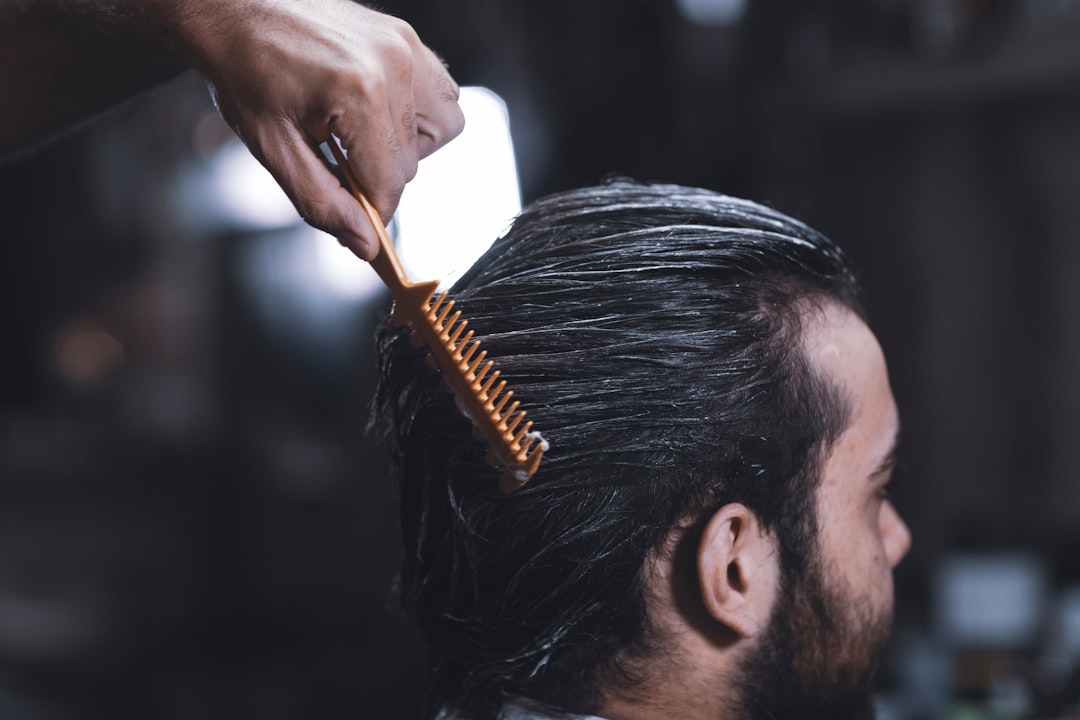
What if minoxidil is not working?
If you have no regrowth after four months, follow your product's label: stop use and ask a doctor. A dermatologist can check the diagnosis, application routine and whether a longer monitored trial makes sense. Some studies and clinical guidance assess outcomes over six to twelve months, but that is not a reason to ignore the four-month instruction on an over-the-counter product.
If you cannot see a difference after a few months, you are not alone. In one 99-patient clinic survey, people who stopped topical minoxidil had used it for a median of three and a half months, and half cited no improvement. That shows why follow-up and realistic expectations matter; it does not prove those patients would have responded if they continued.
This post is for someone worried that minoxidil is not working: what to check at the label's four-month point, why study response rates differ, and what to discuss with a dermatologist if a longer monitored course still produces no visible change. For the month-by-month expectation by formulation, the minoxidil results timeline is the primary guide.
Table of contents
- Minoxidil results peak at about 12 months, then decline slowly
- Four months, six months or twelve: why the sources disagree
- Early stopping is common in clinic samples
- Why one source says 35% respond and another says 84%
- The non-responder question: sulfotransferase
- Minoxidil results at the hairline were never the ones promised
- Six things that stop a real result from showing up
- What the evidence supports when minoxidil results are absent at 12 months
- Three things people get wrong about minoxidil results
Minoxidil results peak at about 12 months, then decline slowly
Regrowth on topical minoxidil tends to peak at around one year and then fall away gradually, while still holding above where it started. That is the finding of the only published study that kept the same men on the drug for five years, and it is the single most useful sentence in the whole literature for setting expectations.
| Study | Design | What happened to the regrowth |
|---|---|---|
| Olsen et al, J Am Acad Dermatol 1990 | 31 men, 4.5 to 5 years of 2% and 3% solution | Peaked at 1 year, slow decline over subsequent years, still above baseline at 5 years |
| Kanti et al, J Eur Acad Dermatol Venereol 2016 | 45 men, 104 weeks of 5% foam, frontotemporal and vertex measured | Frontal hair width up significantly at week 52 and counts at week 76, back to values comparable with baseline at week 104 |
| Olsen et al, J Am Acad Dermatol 2002 | 393 men, 48 weeks, randomised against 2% and placebo | 5% clearly superior at week 48, with response appearing earlier than on 2% |
The Kanti trial is worth reading closely because it is the only one that tracked the frontal area over two full years. Its authors described the outcome as minoxidil "stabilizing" hair density, which is a generous reading of measurements that returned to near baseline. Both readings are defensible. Untreated androgenetic alopecia does not hold still, so ending year two where you started is not the same as doing nothing. It is also not the picture most people have in their heads when they buy the first bottle.
Two caveats matter. Group 1 in that trial was 22 men, and the extension phase was open label with no placebo arm, so it establishes an arc rather than an effect size. And the 1990 five-year study used 2% and 3% solution, not the 5% that is standard now.
The practical consequence is to document progress rather than relying on memory. Ask a clinician at the label's four-month checkpoint if you see no regrowth; if continued treatment is appropriate, assess it over the period that clinician recommends. A small, older long-term study found group-average regrowth peaking near one year, but individual results differ.
Four months, six months or twelve: why the sources disagree
The four-month figure is an instruction on the over-the-counter label and should be followed. Longer research and clinical timeframes answer a different question: how outcomes evolve among people continuing treatment under appropriate care.
| Source | What it says | What kind of statement it is |
|---|---|---|
| US men's 5% solution label | "Results may occur at 2 months... For some men, you may need to use this product for at least 4 months"; stop use and ask a doctor if "you do not see hair regrowth in 4 months" | Over-the-counter labelling, written so an unsupervised buyer does not spend a year on a product that is not working |
| American Academy of Dermatology | "It takes time to see results, usually about 6 to 12 months" | Patient guidance from a clinical body |
| Zari, Dermatol Ther 2023 | Emphasises "the need to use minoxidil for a minimum of 12 months to assess treatment efficacy" | Conclusion of a 400-patient compliance study |
| Olsen 1990 | Regrowth peaked at 1 year | Longest same-cohort follow-up |
Read the label line again. It does not say the drug has failed at four months. It says stop and ask a doctor, which is exactly the right instruction for a product bought off a shelf with no diagnosis behind it. The same label also says "This product will not work for all men."
The reconciliation is straightforward: follow the label at four months if you see no regrowth, and discuss the diagnosis and next step with a clinician. If they recommend continuing, matched photographs over a longer interval may give a clearer picture. Do not independently override the label because a study followed participants for longer.
Early stopping is common in clinic samples
Non-adherence can prevent a fair trial, but these clinic studies cannot establish whether it is the most common reason for a lack of results. The treatment also does not work for everyone, even when used correctly.
In a survey of 99 alopecia patients at a university dermatology clinic, adherent patients had been using topical minoxidil for a median of 24 months. Non-adherent patients had used it for a median of 3.5 months before stopping, 35% of them for under three months, and the most common reason given was no improvement, cited by 50% (Senthilnathan et al, J Drugs Dermatol 2023).
In a retrospective review of 400 consecutive patients prescribed 2% or 5% minoxidil at a dermatology clinic, 345 of them, or 86.3%, had discontinued it. Discontinuation ran at 95.3% among those who reported no efficacy and 69.3% among those who reported improvement, and it fell sharply once someone had passed a year of use. Having experienced any side effect pushed discontinuation to 93.6% against 75.8% without (Zari, Dermatol Ther 2023).
These samples show that many patients stop early, often because they see no improvement or dislike the routine. They do not tell us what proportion would have responded later, and the people who continue differ from those who stop. If application is difficult or irritating, that is worth discussing with a clinician instead of silently treating the product as a test of willpower.
One formulation note that follows directly from this. Adherence is a real clinical variable, not a character flaw, and the vehicle is part of it. The foam exists because propylene glycol in the solution is what irritates most scalps, and the choice between them is covered in minoxidil foam vs solution. Choosing the format you will actually use twice a day for a year beats choosing the one with the marginally better trial.
Why one source says 35% respond and another says 84%
Published response rates for the same drug range from about 13% to about 84%, and every one of those figures is real. They differ because "response" is defined by a different person in each study.
| Reported figure | Source | How response was decided |
|---|---|---|
| 30 to 40% | Goren et al, Dermatol Ther 2014 | Described as efficacy "in the overall population", the framing used in the biomarker literature |
| About 40% of men get moderate regrowth | American Hair Loss Association | Summary of the registration programme for a lay audience |
| 13 to 20% of women on 2% | Roberts et al, Dermatol Ther 2014 | Pooled counts of women with moderate regrowth; the same paper puts off-label 5% at up to 40% |
| 84.3% at least moderately effective | Pfizer-funded German observational study of 984 men over one year, summarised by the ISHRS | Physician and patient ratings, no control group |
| No responder rate at all | Olsen 2002 | Non-vellus hair counts in a marked target area, plus rated scalp coverage |
The 84% figure and the 35% figure are not in conflict so much as in different genres. An uncontrolled, manufacturer-funded study asking 984 men whether their hair looks better after a year of treatment will always land high, because everyone in it chose to be there and nobody was comparing against a placebo arm. The registration trials refused to publish a responder rate at all, and instead counted individual non-vellus hairs inside a tattooed target circle, which is a far harsher instrument than a mirror.
That is the number worth carrying away. The endpoint in the trials is hair count per square centimetre in one small photographed patch. A statistically solid result there can be genuinely difficult to see in a bathroom. If you want to know which side of that line you are on, the only way is a matched pair of photographs, and the protocol for shooting them is the same one used for before and after pictures in surgery: same light, same angle, same dry hair, same length, a fixed interval.
The non-responder question: sulfotransferase
Minoxidil is a prodrug. It does nothing to a hair follicle until an enzyme in the follicle's outer root sheath, sulfotransferase SULT1A1, converts it to minoxidil sulfate. People with low follicular sulfotransferase activity have less of the active drug where it needs to be, and that is the leading biological explanation for non-response.
The evidence is consistent and small.
- A retrospective assay of plucked follicles predicted minoxidil response with 95% sensitivity and 73% specificity in a mixed cohort (Goren et al, Dermatol Ther 2014).
- A replication in women on 5% minoxidil for six months reported 93% sensitivity and 83% specificity (Roberts et al, Dermatol Ther 2014).
- In 120 pattern hair loss patients at an Indian outpatient clinic, 40.8% had low sulfotransferase activity: 49.3% of the men against 26.6% of the women (Chitalia et al, Dermatol Ther 2018).
That last study contains a useful negative result: sulfotransferase activity showed no correlation with age, duration or grade of hair loss, or family history. You cannot infer enzyme activity from those features. It is one proposed predictor of response, not the only reason someone may or may not see a result; diagnosis, use pattern and individual biology also matter.
Two limits matter. Much of this work comes from related researchers, some with a commercial interest in the assay. The test is not routine dermatology care. In practice, a clinician's assessment and matched photographs are more useful than assuming you can infer enzyme activity from appearance.
Minoxidil results at the hairline were never the ones promised
The men's 5% minoxidil label states plainly that it is for the top of the scalp only, and under "do not use" it lists hair loss on the front of the scalp: "5% minoxidil Topical solution is not intended for frontal baldness or receding hairline." The registration trials measured a target circle on the vertex. If you are judging your minoxidil results by the temples in the mirror, you are grading the drug on an exam it never sat.
There is some frontal evidence, and it is thin. The Kanti 104-week foam trial is the main one that measured the frontotemporal area, and it found significant gains in frontal hair width at week 52 and hair counts at week 76 before both returned toward baseline by week 104, in 22 men, open label (PMID 26387973). That is a real signal. It is not the basis for expecting a temple to fill in.
Part of this is geometry rather than pharmacology. A recession is a border, and a border is judged against the bare skin next to it, so a 10% density gain reads as nothing. The crown is a field, and the same 10% reads as coverage. The five signs that distinguish a receding hairline from the mature one most men settle into are set out on the receding hairline page, and if you are not certain which pattern you have, the Norwood stage finder is the faster way to place it before choosing what to measure.
Six things that stop a real result from showing up
| What goes wrong | Why it matters | What the evidence or label says |
|---|---|---|
| Applying to hair, not scalp | The drug has to reach skin. Coating the hair shaft delivers nothing | The label directs application "directly onto the scalp in the hair loss area" |
| Washing it off early | Absorption is fast but not instant | Relative to 11.5 hours of contact, absorption was about 50% complete at 1 hour and over 75% at 4 hours (Ferry et al, J Pharm Sci 1990) |
| Using more, or more often | It may increase irritation without improving regrowth | The label says "using more or more often will not improve results". A study of systemic drug levels at higher application frequency does not establish that local scalp uptake is saturated (Eller et al, Clin Pharmacol Ther 1989) |
| Treating the wrong diagnosis | Minoxidil is labelled for hereditary pattern loss | The label says do not use if loss is "sudden and/or patchy", if there is no family history, or if the reason is unknown |
| No baseline photograph | A slow change against a memory is invisible | The trials used fixed-position macro photography of a marked area for exactly this reason |
| Judging it in the wrong place | Wet hair, overhead light and a phone held above the crown all exaggerate scalp show | Same-condition matched pairs are the only readable comparison |
None of those six is a reason to exceed the label. All of them are reasons a genuinely working treatment can look like a failure at month five.
What the evidence supports when minoxidil results are absent at 12 months
If a clinician has advised continued treatment beyond the label checkpoint and matched photographs still show no change, options may include a different diagnosis or treatment plan. None of these is a decision to make from a web page, and each carries its own trade-off.
Adding a 5-alpha reductase inhibitor. Minoxidil grows hair; it does nothing to DHT, which is what drives the miniaturisation. Finasteride and dutasteride work on the cause rather than the growth phase. In the registration trials for finasteride 1 mg, sexual adverse experiences were reported by 3.8% of men in year one against 2.1% on placebo, a difference of 1.7 percentage points (FDA prescribing information for Propecia), and the label records the hair effect reversing within 12 months of stopping. Those profiles are the real question, covered in finasteride side effects and in the dutasteride comparison. A lower-systemic-exposure route exists and is reviewed in topical finasteride. Both drugs are prescription-only in most countries and are not licensed for women who could become pregnant.
Switching to low-dose oral minoxidil. This bypasses the scalp entirely, which removes the adherence and irritation problems in one move, and it is off-label everywhere for hair loss. In one cross-sectional survey, oral patients missed a mean of 0.15 treatment days against 1.2 for topical, and nobody on oral stopped because of difficulty of use against 18.8% on topical, but hypertrichosis ran at 48.5% against 6.25% (Kobayashi et al, J Drugs Dermatol 2025). The dose-dependent cardiovascular and unwanted-hair trade-offs are set out in oral minoxidil for hair loss.
Microneedling as an adjunct. A meta-analysis of 12 randomised trials in 631 patients found combined microneedling plus minoxidil improved hair count over minoxidil alone, with a standardised mean difference of 1.32, and improved hair diameter as well (Ahmed et al, Arch Dermatol Res 2025). Two things in that paper contradict the usual advice. Heterogeneity was 88%, which is very high and means the individual trials disagreed a lot. And subgroup analysis found no significant effect of needle depth, at or under 1 mm versus over 1 mm, which undercuts the widely repeated claim that 1.5 mm is the depth that matters. Adverse events were more frequent with the combination.
Tretinoin as an adjunct. This is the most over-sold option on the internet. Topical tretinoin does raise follicular sulfotransferase expression, and in one study 43% of subjects initially predicted to be non-responders were reclassified as predicted responders after five days of tretinoin (Sharma et al, Dermatol Ther 2019). Note what that measures: a biomarker prediction, not hair. A 2026 review from NYU found the clinical data minimal, with one randomised trial reporting similar outcomes for dual therapy and minoxidil alone, and concluded that current evidence does not support first-line dual use while allowing it as an adjunct in non-responders, weighed against more irritation (Maas et al, Skin Appendage Disord 2026).
Surgery. A transplant redistributes hair that is already resistant to DHT; it does not stop the loss elsewhere, which is why most surgeons keep patients on medication afterwards. If the pattern is established rather than early, the graft counts and prices by country sit in the hair transplant cost calculator, and what a given stage typically needs is on the relevant page, for example Norwood 4.
Whichever of those fits is a question for a dermatologist or a hair restoration surgeon who can look at your scalp, because two of the five are prescription decisions and one is surgery.
Three things people get wrong about minoxidil results
The shed is not proof it is working. An early shed is common and is consistent with follicles being pushed into a new growth cycle, but it is not a diagnostic test in either direction. Plenty of people shed and do not respond, and plenty respond without a noticeable shed. Continuing heavy shedding, patchy loss, scalp pain or inflammation is not a minoxidil shed and needs an assessment.
More product does not buy a faster result. The label says using more or applying it more often will not improve results. Do not infer local follicle saturation from a study that measured systemic drug levels; excess product may instead increase irritation.
"It stopped working after three years" is usually the underlying loss, not tolerance. The five-year data show regrowth peaking at year one and declining slowly while remaining above baseline. That is the expected shape of a maintenance drug applied to a progressive condition, not evidence that the receptor stopped listening.
Side effects belong in the same conversation as results. On 5% solution, itching and local irritation were more common than on 2% or placebo in the 393-man trial (Olsen 2002). Across placebo-controlled trials in 1,333 women, unwanted facial or body hair was spontaneously reported by 50 of them, 4%, in a dose-related pattern, with 0.5% in post-marketing data (Dawber and Rundegren, J Eur Acad Dermatol Venereol 2003). The label directs anyone with chest pain, rapid heartbeat, faintness, dizziness, sudden weight gain or swelling of the hands or feet to stop and see a doctor. The full picture, including the three tiers of evidence behind the different published lists, is in minoxidil side effects.
What to take to a dermatology appointment
If twelve months have produced nothing, the appointment goes better with evidence than with an impression. Worth bringing:
- Two photographs of the same area under the same conditions, taken at least six months apart.
- The product, so the strength and vehicle are not in doubt, and an honest count of missed days.
- How long the loss has been going on, and where it started.
- Any shed, irritation, unwanted hair growth, palpitations or swelling, and when it began.
- Whether anything else changed in that year: a new medication, weight loss, illness, or a period of unusual stress.
What a clinician can do that a bottle cannot is confirm the diagnosis. Pattern hair loss is common but not the only explanation, and minoxidil is labelled for hereditary pattern loss. Bring the timeline and photographs to the four-month appointment if the label directs one; a clinician can then decide whether further monitored use is appropriate.
Frequently Asked Questions
Is minoxidil not working after 3 months normal?
It can be too early to see a visible result. One clinic survey found that people who stopped had used topical minoxidil for a median of 3.5 months, but that does not prove they would have responded later. Follow your product's instructions, and if there is no regrowth at the four-month checkpoint, stop use and ask a doctor as the men's 5% solution label directs.
How do I know if I am a minoxidil non-responder?
There is no routine clinical test that settles this for everyone. Low follicular sulfotransferase activity is one proposed contributor to non-response, and research assays have shown promising sensitivity in small studies, but they are not standard dermatology care. A clinician can first check the diagnosis, how the product was used and whether further monitored treatment is appropriate.
Do minoxidil results keep improving after the first year?
Generally no. Regrowth peaked at one year in the five-year follow-up study and declined slowly afterwards while staying above baseline, and the only two-year frontal study saw gains at weeks 52 and 76 return toward baseline by week 104. The realistic long-term outcome is holding position rather than continued gain.
Does minoxidil work on a receding hairline?
The men's 5% solution label says it is not intended for frontal baldness or a receding hairline, and the registration trials measured the vertex. One 104-week open-label trial in 22 men found frontal gains at weeks 52 and 76 that faded by week 104, which is a signal rather than a basis for expecting a temple to fill in.
How Bald is an information site, not a clinic. Nothing here is medical advice and we do not sell procedures or medication. Figures are estimates with sources listed on our methodology page. Talk to a dermatologist or hair restoration surgeon before treatment.
More guides
Minoxidil Side Effects: What the Trials, Labels and Reports Show
Minoxidil side effects separated into what the trials measured, what the label lists and what gets reported afterwards, with the rate for each.
Oral Minoxidil for Hair Loss: Doses, Results and Risks
Oral minoxidil is prescribed off label for hair loss at 0.25 to 5 mg. What the trials found, the dose trade-off, and what the heart data actually shows.
Minoxidil Foam vs Solution: What the Trials Actually Compared
Minoxidil foam has never been tested against 5% solution. Every head-to-head used the 2% strength, and the larger trial missed its own target.