Hair Transplant Side Effects: The Rates, the Drugs and the Permanent Ones
Hair transplant side effects split four ways: normal recovery, complications with published rates, drug effects and the ones that never reverse.

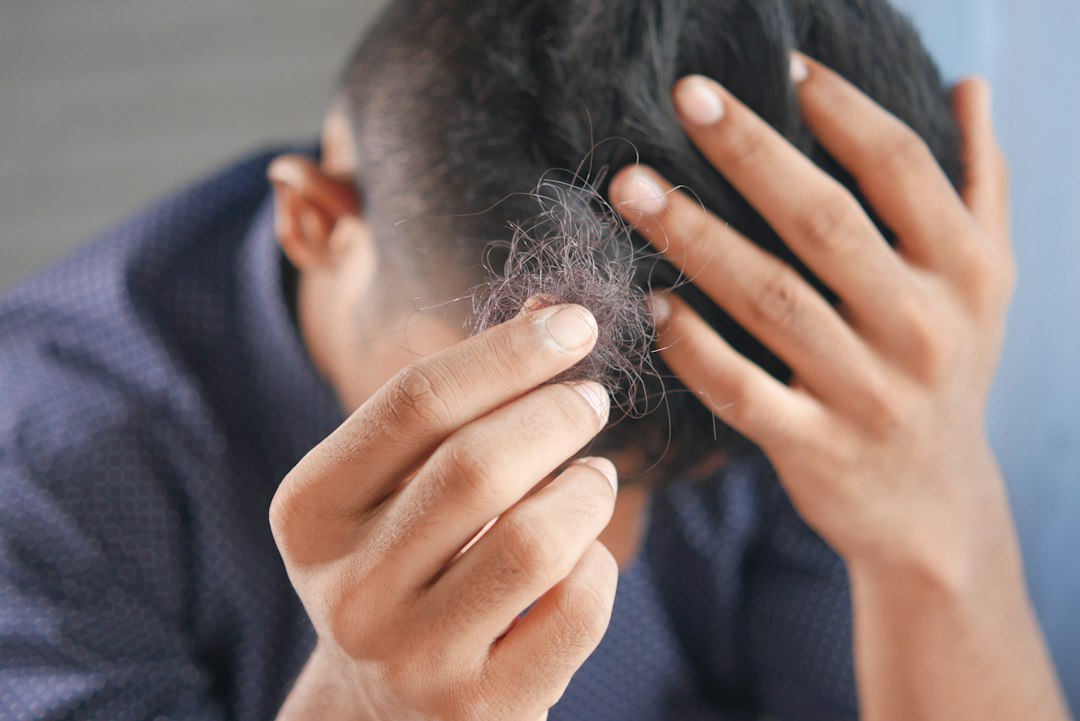
What are the side effects of a hair transplant?
Most hair transplant side effects are short-lived: swelling, crusting and shedding of the transplanted hairs are common during recovery. One 1,317-patient multicentre study recorded folliculitis in 12.11%, while complication rates vary across studies and procedures. Over-harvesting and scarring can leave lasting changes; an unwanted aesthetic result may also require difficult, sometimes limited repair.
The problem with almost every page about hair transplant side effects is that it lists fifteen things in one column and gives a rate for none of them. Swelling that clears in a week sits next to scalp necrosis. Itching sits next to permanent donor depletion.
This page separates them into four categories, each with a different probability and a different consequence, and attaches the published number where one exists. It also covers the part nobody writes about: a meaningful share of what patients call hair transplant side effects are side effects of the drugs given around the operation, not of the surgery itself.
Free 1-page hair transplant quote checklist
Compare graft counts, surgeon involvement, included costs, follow-up and possible second sessions.
Table of contents
- Four different things get called hair transplant side effects
- The published rates, and how thin the evidence behind them is
- The side effects that come from drugs, not surgery
- The graft count that changes your risk
- The hair transplant side effects that are permanent
- Where the operation happens matters more than the technique
- What to ask before you sign
- Frequently Asked Questions
Four different things get called hair transplant side effects
Every list you will read blends four categories that behave nothing like each other. Sorting them is the single most useful thing you can do before a consultation.
| Category | Examples | Roughly how likely | Reversible? |
|---|---|---|---|
| Expected recovery | Crusting, swelling, redness, the shed of transplanted hairs | Near certain to common | Yes, days to weeks |
| Surgical complications | Folliculitis, infection, numbness, poor growth, necrosis | 12% down to rare | Usually, with treatment |
| Drug effects | Anaesthetic, perioperative steroids, antibiotics, finasteride or minoxidil started afterwards | Depends entirely on the drug | Usually on stopping |
| Permanent outcomes | Donor depletion, scarring, unnatural hairline, wrong density | Not measured as adverse events | No, only partially repairable |
The fourth row matters most and gets the least attention, because it is not classified as a complication at all. Published series count folliculitis and infection. They do not count the patient unhappy with where his hairline was placed at 24, or the one whose donor area was harvested too aggressively for a second procedure to be possible. Those are recorded as aesthetic results, and there is no register of them.
Our hair transplant recovery timeline carries the full complication table with rates, timing and what should prompt a call to the clinic. This page works on the reasoning around those numbers rather than restating them.
The published rates, and how thin the evidence behind them is
The entire published evidence base on hair transplant complications is smaller than a single mid-sized drug trial. That is the honest starting point, and no clinic page will give it to you.
The most recent systematic review and meta-analysis on the subject (Khatib et al, Aesthetic Plast Surg 2025, PMID 40913181) searched four databases and found 45 usable articles. Twenty-four were case reports describing 27 patients in total. The 21 observational studies between them covered 2,353 patients, of whom 442 reported a complication of any kind. Pain and discomfort dominated: 281 of those 442, or 63.6%, were pain complaints. The authors' conclusion was that hair transplantation is generally safe, and it is worth noticing how small the dataset behind that sentence is.
Compare that with how a drug is monitored. Finasteride has randomised placebo-controlled trials, a regulator-mandated label and spontaneous reporting systems like FAERS and EudraVigilance collecting reports for as long as it is on the market. Hair restoration surgery has none of that. No adverse event registry, no mandatory reporting, and the studies that exist are retrospective and published by the clinics that performed the operations. Every rate below is what one group of surgeons recorded about their own work.
With that caveat, the useful figures:
- Folliculitis, 12.11%. From a four-centre retrospective review of 1,317 patients with nine months of follow-up (Zhou et al, Plast Reconstr Surg 2024, PMID 37904273), with onset usually one to four weeks after surgery.
- Notable complications, 9.9%. A retrospective series of 1,030 primary FUE cases, cited in the 2026 Frontiers in Medicine review of FUE complications, where nearly half were mild events such as slight frontal swelling and donor-site itching.
- Donor-site pain, pooled 6% in FUE, with a non-significant trend toward lower rates than strip surgery. That comparison has never been confirmed statistically, which is worth remembering when a clinic tells you FUE is safer.
- Long-term numbness or paraesthesia, about 2%, mainly temporal or occipital, most cases resolving in four to eight months.
- Overall complication rate, 1% to 5%. The most quoted figure, and it comes from historical series performed mainly with strip surgery.
The side effects that come from drugs, not surgery
A large share of what patients experience around a transplant is pharmacological, not surgical, and separating the two changes what you should be asking about.
The anaesthetic. The two agents used in hair transplantation are lidocaine and bupivacaine (Jimenez, Vogel and Avram, J Am Acad Dermatol 2021, PMID 33915242). The FDA label for lidocaine caps infiltration at 4.5 mg/kg without epinephrine and 7 mg/kg with it, generally not exceeding 300 mg and 500 mg. Above that, the label describes systemic toxicity running from lightheadedness, tinnitus and twitching through to convulsions, respiratory arrest and cardiovascular collapse. Toxicity during a hair transplant is rare enough that the first bupivacaine case was published as a single case report (Dermatol Surg 2021, PMID 32205746), but it is the mechanism behind most of the serious adverse events reported in this surgery. It is also why a long session covering more scalp is not pharmacologically equivalent to a small one.
The epinephrine. Added to the tumescent solution to reduce bleeding, it also constricts scalp blood vessels. The 2026 review lists high epinephrine concentration among the technical risk factors for recipient-site necrosis and recommends staying below 1:200,000.
The steroids. Many clinics add triamcinolone to the tumescent solution or give a short systemic course to control swelling. The 2026 review cites a prospective cohort in which adding triamcinolone cut postoperative oedema from 40% of cases to 9%. Part of the reason your forehead did not swell is a steroid, with the usual short-course considerations that go with one.
The antibiotics. Often handed out routinely. The same review states plainly that routine antibiotic prophylaxis is not universally recommended, and may be considered in megasessions or patients with additional risk factors. Worth asking why a course has been prescribed rather than assuming it is standard.
The hair loss drugs started afterwards. This is the big one, because it runs for years rather than days. The American Academy of Dermatology is explicit that hair loss and thinning can continue after a transplant and that a dermatologist may recommend medicine to slow it, which is why most patients leave with a prescription. Finasteride reported sexual adverse experiences in 3.8% of 945 men in year one of its registration trials against 2.1% of 934 on placebo, and our guide to finasteride side effects sets out what those trials could and could not detect. Topical minoxidil most often causes scalp irritation, and taken orally it causes unwanted body hair in roughly 15% of users, covered by tier of evidence in the post on minoxidil side effects. A side effect that starts six weeks after surgery and persists for a year is far more likely to belong to a drug than to the operation.
The graft count that changes your risk
The graft number in your quote deserves a safety discussion, not just a price calculation. One large study links high graft counts to postoperative folliculitis; that does not make graft count the strongest predictor of every complication.
In the 1,317-patient folliculitis study, the risk factors that reached significance were: 4,000 grafts or more (odds ratio 4.82, 95% CI 1.45 to 16.01), transplant density above 45 grafts/cm² (OR 2.15, 1.38 to 3.37), surgery in summer (OR 1.77, 1.05 to 2.99), and a first wash later than three days after surgery (OR 1.56, 1.09 to 2.22). The confidence interval on the graft count is wide, so the size of the effect is uncertain, but the direction is not.
The necrosis literature points the same way. The 2026 review lists dense packing above 50 follicular units per cm², megasessions above 3,500 to 4,000 grafts, deep or overlapping slits and excessive tumescence as the technical risk factors. Donor depletion is described as increasingly observed in high-volume sessions exceeding 3,000 to 4,000 grafts.
Now put that next to what advanced pattern loss can require. The graft estimates on our stage pages put Norwood 6 at 3,500 to 5,500 grafts and Norwood 7 at 5,000 to 7,000 across a treatment plan. The implication is not that advanced stages cannot be treated. It is that a large single-session proposal deserves a discussion of density, donor supply, staging and individual risk. The folliculitis study found an association at 4,000 grafts or more; it did not test whether splitting the same plan into two sessions improves outcomes. If you are not sure which stage you are at, the Norwood stage finder can help describe the visible pattern.
Graft count is also the main driver of what you pay, and our hair transplant cost calculator prices sessions by graft number and country, which makes clear why a clinic paid per procedure has an incentive to do everything at once.
The hair transplant side effects that are permanent
Some outcomes can last beyond the usual recovery period. Repair may help in some cases, but cannot always restore the original donor supply or erase scars.
Donor depletion. Extracting too many follicular units from the back and sides leaves visible thinning, a moth-eaten look or a permanent shortage of donor hair for any future procedure. The 2026 review attributes it to inadequate donor assessment and to patients requesting large graft counts despite insufficient donor density while underestimating how far their loss will progress. Donor hair is a finite budget, and spending it early is the one decision that cannot be walked back.
Scarring. FUE leaves hundreds of small round scars rather than one line, and at very short hair lengths these show as pinpoint white dots. Strip surgery leaves a linear scar that stretched and became visible in 15% of one strip-heavy series. Neither technique is scarless, whatever the advertising says, and our guide to hair transplant scars sets out what each one leaves.
Nerve and vascular injury. Numbness is usually transient, but neuropathic pain occasionally persists. More unusually, the Khatib review found arteriovenous fistulas at the donor site in 11 of the 27 published case-report patients, associated with punch-graft FUE. Eleven cases in the world literature is genuinely rare. It is also a reminder that case reports exist because someone bothered to write them up, not because anyone counted.
The aesthetic result. A hairline placed too low on a 25-year-old, grafts angled wrongly, density that does not match, a transplanted island stranded as the native hair around it keeps receding. The 2026 review groups these as suboptimal aesthetic outcomes with a major impact on satisfaction, and they are the most common reason for repair surgery. Reading results galleries with that in mind is a skill in itself, and our guide to hair transplant before and after photos covers the checks worth running.
Where the operation happens matters more than the technique
Who holds the punch is a larger determinant of your risk than whether the clinic calls its method FUE, DHI or sapphire. The professional bodies say so directly.
The International Society of Hair Restoration Surgery has a standing consumer alert on unlicensed technicians performing substantial medical parts of the surgery, warning that major and even life-threatening complications can occur. Its 2025 practice census found 59.4% of member surgeons reporting black-market clinics in their own city, up from 51% in 2021, with repair cases from a previous black-market transplant running at 10% of their repair work. The 2026 FUE review makes the same point in clinical language, warning about rising iatrogenic injuries tied to inadequate training and the delegation of key surgical steps to unqualified personnel.
If you are considering surgery abroad, ask who performs each surgical step, how complications will be handled after you return home, and how you will obtain your operative records. Our Turkey hair transplant cost page covers what packages include and leave out.
Technique marketing is largely a distraction here. The differences between DHI and standard FUE are real but small next to whether a qualified surgeon performs the extraction and site creation. Whether the surgery is worth doing at all is a separate calculation, worked through in our piece on whether a hair transplant is worth it.
What to ask before you sign
These are questions for a consultation, not a substitute for one. A surgeon who answers all of them comfortably is telling you something.
- Who physically performs the extraction and the site creation, and are they licensed to practise medicine here?
- How many grafts, and why that number rather than a staged plan across two sessions?
- What implantation density will be used in each area, in follicular units per cm²?
- What is the plan for the hair I have not lost yet, given that pattern loss continues?
- What anaesthetic and what total dose, and what is the protocol if I show signs of toxicity?
- Why are antibiotics or steroids being prescribed, given they are not routine?
- What does your own complication rate look like, for folliculitis, infection and poor growth?
- What happens, contractually, if growth is poor at twelve months?
The realistic summary is that hair transplant side effects are mostly mild, mostly temporary and mostly well described, and that the risks worth worrying about cluster around one decision: how much surgery is done at once, and by whom. The published rates cannot tell you what will happen to you, because they come from single-centre series rather than any registry. A dermatologist or a board-certified hair restoration surgeon who examines your donor area and your family history can tell you far more than any percentage on this page.
Frequently Asked Questions
What are the most common side effects of a hair transplant?
Swelling, crusting and shedding of the transplanted hairs are common parts of recovery. Folliculitis occurred in 12.11% of patients in one 1,317-patient multicentre study; that study's rate is not a universal risk estimate.
Are hair transplant side effects permanent?
Most are not. Swelling, crusting, pain and the post-surgical shed usually resolve; numbness may take longer. Donor depletion and scars can be lasting. An unwanted aesthetic result may be partly correctable, but repair can be limited by the remaining donor supply, which is why the planning conversation matters as much as recovery.
Can a hair transplant make hair loss worse?
Temporarily, yes. Shock loss is a shedding of your existing native hair near the grafts, reported in 0.15% to 15% of patients, starting two to eight weeks after surgery with regrowth around three months. Permanently, a transplant does not stop pattern loss in the hair it did not move, which is why the AAD notes that medicine is often recommended alongside surgery.
Is a hair transplant dangerous?
Serious complications appear uncommon in published series, but rates vary with the study and the definition used. Anaesthetic toxicity, infection, poor wound healing and unsafe surgical practice are possible risks. Ask a qualified clinician about your individual risk and who will perform and supervise each step; the ISHRS consumer alert explains why credentials matter.
How Bald is an information site, not a clinic. Nothing here is medical advice and we do not sell procedures or medication. Figures are estimates with sources listed on our methodology page. Talk to a dermatologist or hair restoration surgeon before treatment.
More guides
Hair Transplant: How Does It Work? The Biology, the Surgery and the Clock
Hair transplant: how does it work? Donor dominance, follicular units, and why careful graft handling and time out of the body matter.
Is Hair Transplant Worth It? What the Satisfaction Data Shows
Is hair transplant worth it? The published satisfaction scores, the lifetime cost multiplier, and the eight cases where surgeons say no.
DHI Hair Transplant: What the Implanter Pen Actually Changes
A DHI hair transplant is FUE placed with a sharp implanter pen. What the pen changes, what it does not, and who should be holding it.