DHI Hair Transplant: What the Implanter Pen Actually Changes
A DHI hair transplant is FUE placed with a sharp implanter pen. What the pen changes, what it does not, and who should be holding it.

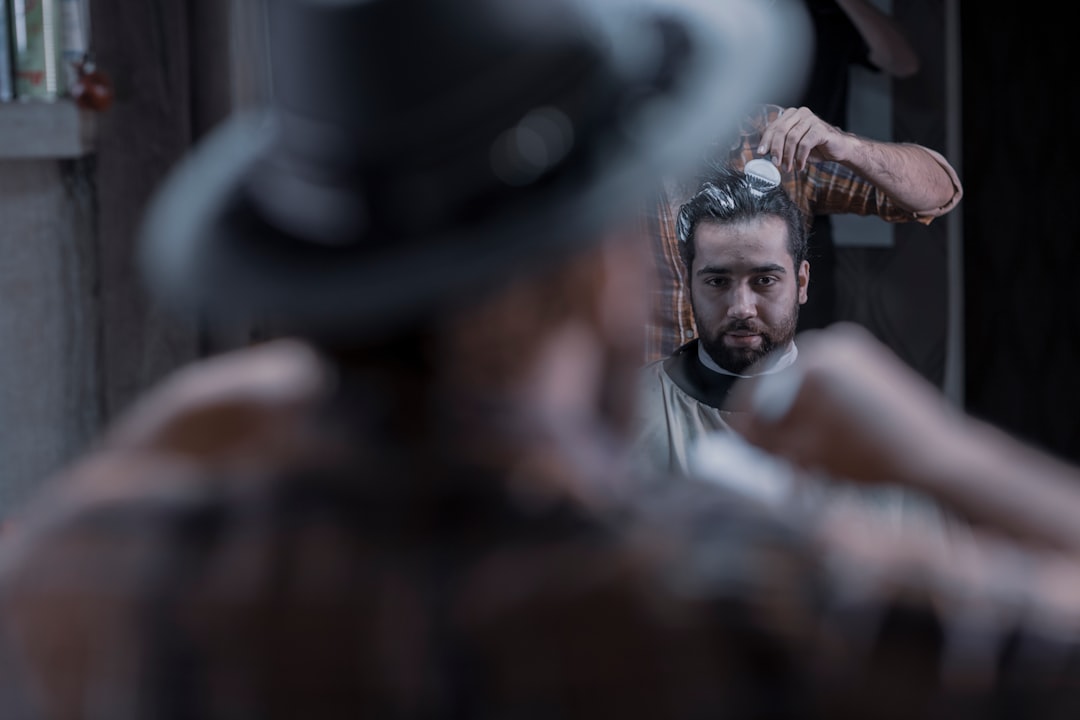
What is a DHI hair transplant?
DHI stands for Direct Hair Implantation. It is not a separate operation. It is an FUE hair transplant in which the grafts are placed with a sharp implanter pen that makes the recipient incision and inserts the graft in one movement. The ISHRS states plainly that DHI "is another name for the implantation technique using sharp implanters. It is not a hair transplant method and should not be marketed as such."
That one sentence from the professional body settles most of what a DHI hair transplant page argues about. The donor harvesting is identical to FUE. The donor scarring is identical to FUE. What changes is the placement step, the moment grafts go back into the scalp.
That step matters. It just does not matter in the way the marketing says it does. Below is what the published evidence supports about implanter pens, what it does not, where the pen genuinely helps, and the single question a DHI quote should answer before the price does.
Free 1-page hair transplant quote checklist
Compare graft counts, surgeon involvement, included costs, follow-up and possible second sessions.
Table of contents
- What a DHI hair transplant actually is
- DHI vs FUE: one step differs, three do not
- What the graft survival evidence really shows
- The density claim cuts both ways
- Who holds the pen is the question that matters
- Where the implanter pen genuinely helps
- DHI hair transplant cost: what the upcharge buys
- Three claims to push back on
- What to ask before booking a DHI hair transplant
- The bottom line
- Frequently Asked Questions
What a DHI hair transplant actually is
A DHI hair transplant is FUE harvesting followed by placement with a sharp implanter, and the instrument is more than thirty years old. A 2023 review in Facial Plastic Surgery dates the implanter to 1992, when Dr Choi introduced a device that created the incision and placed the follicular unit in the same motion. Its initial popularity was greater in the East, partly because Asian hair is straight, thick and mostly grows in one and two hair units that load neatly into a needle.
Placement is one of six steps, and the guide to how a hair transplant works walks through the other five. There are two standard placement workflows. Premade sites means all the recipient incisions are made first and grafts are inserted afterwards. Stick and place means each site is made and filled immediately, and a sharp implanter is one tool for doing that. Dull implanters and plain forceps place grafts into premade sites instead. So "DHI" names a tool and a sequence, not a category of surgery. That is why a PubMed search for "direct hair implantation" in titles and abstracts returns nothing, while the papers on sharp implanters run back decades.
If you are still working out how much hair you have lost and whether surgery is on the table at all, start with the Norwood stage finder rather than with a technique name. Technique is the last decision, not the first.
DHI vs FUE: one step differs, three do not
The honest comparison table is short, because most rows are identical.
| Step | Standard FUE | DHI (sharp implanter) |
|---|---|---|
| Donor harvesting | Punch excision of follicular units | Punch excision of follicular units, unchanged |
| Donor scarring | Scattered dot scars | Scattered dot scars, unchanged |
| Recipient site creation | Made first with a blade or needle | Made by the implanter needle at the moment of placement |
| Graft placement | Forceps or dull implanter into premade sites | Sharp implanter, incision and insertion in one movement |
| Graft out-of-body time | Depends on team size and workflow | Depends on team size and workflow |
| Typical price | Baseline | Usually quoted at a premium |
Notice which row is not there: results. There is no randomised trial of DHI against FUE. The nearest evidence is a 2025 multicentre retrospective study of 191 Chinese patients across four hospitals, which compared the premade incision workflow against stick and place. It found no significant difference in graft survival rate and no significant difference in complication rate. Stick and place achieved higher graft density and higher patient satisfaction; premade incisions were faster to perform and quicker for junior surgeons to learn.
That study compares workflows rather than branded pens, and it is a retrospective level III comparison. It is the closest head-to-head identified here, and its headline finding is that the two approaches land in the same place on the outcome patients care about.
What the graft survival evidence really shows
The survival numbers quoted in DHI marketing trace back to studies with fewer than a dozen patients between them. Here is the actual evidence base.
| Study | What it did | What it found | What it cannot support |
|---|---|---|---|
| Lee et al, Dermatol Surg 2001 | 11 Korean men, one and two hair units placed with the KNU implanter into tattooed 1.5 cm² templates | 92.0% hair survival at 6 months, 90.4% at 12 months. About half the transplanted hairs shed within the first month | That the implanter beat any other placement method; there was no comparison arm |
| Lee et al, Dermatol Surg 2006 | 4 Korean men, single-hair units placed by implanter at 20, 30, 40 and 50 per cm² | Survival at 20 and 30 grafts/cm² was higher than at 40 and 50. Authors concluded 30 was the appropriate density | Any claim that an implanter pen enables higher density safely |
| Nakatsui et al, Dermatol Surg 2008 | 1 patient, lateral slit technique with blades, densities from 23 to 72 grafts/cm² | 98.6% growth at 72 grafts/cm², 95.6% at 23 | Anything generalisable; it is a single-patient observational study, and it used blades, not a pen |
| Zhao et al, Aesthetic Plast Surg 2025 (linked above) | 191 patients, four hospitals, premade sites versus stick and place | No significant difference in survival or complications; higher density and satisfaction with stick and place | That the pen itself was responsible, since the workflow and the tool are not the same variable |
The 92% figure that circulates as a DHI selling point is from the 2001 study, and it is a real number honestly reported. It came from eleven men with no comparison group, so presenting it as evidence that one placement tool outperforms another is a claim the paper never made.
That study found something else worth carrying into your own expectations: roughly half the transplanted hairs fell out within a month. That is normal shedding, not failure, and it is the phase clinic galleries never photograph. Our guide to reading before and after photos covers what to check in the images you are shown.
The density claim cuts both ways
Higher density is the most common DHI selling point, and it is also the mechanism behind several complications. A 2026 review of FUE complications in Frontiers in Medicine lists dense packing and megasessions among the risk factors for recipient-area necrosis, and lists high implantation density among the risk factors for folliculitis, alongside thick, coarse or curved hair shafts.
The same review makes a point that no pen manufacturer prints: "Excessive pressure from forceps or implanters may result in crushing of the bulge or dermal papilla." An implanter is not inherently gentle. It is a tool that can be used gently.
The surgeon-written practical guide to sharp implanters published in Clinical, Cosmetic and Investigational Dermatology in 2023 is candid about this. Its listed advantages are speed, simplicity, less crushing than grabbing follicles with forceps, and angle control at the moment of insertion. Its listed disadvantages are that the technique is labour intensive, awkward in patients who bleed readily, and that "repeated graft popping in inexperienced hands may result in a low graft survival rate and disappointing outcome". Incisions that are too shallow can kill the graft; incisions that are too deep can cause pitting scars and delayed healing.
So the tool has a skill floor, and above that floor the density question is unresolved. Our recovery pages set out the published complication rates for folliculitis, shock loss and the rest, drawn from the same reviews.
Who holds the pen is the question that matters
A sharp implanter makes a skin incision, which under the professional body's own rules makes the person holding it a surgeon. The ISHRS Position Statement on Qualifications for Scalp Surgery, revised in July 2024, states that any procedure involving a skin incision to prepare the scalp to receive tissue, including creating recipient sites, "by any means, including robotics, is a surgical procedure" that "must be performed by a properly trained and licensed physician". The statement recognises delegation to licensed professionals such as physician assistants and nurse practitioners working within their scope and under supervision. It does not recognise delegation to unlicensed technicians.
This is where the DHI question becomes a real question rather than a branding one. In high-volume clinics the surgeon frequently designs the hairline and then leaves, while technicians do the extraction and the implantation. With premade sites, at least the incisions were the surgeon's work. With a sharp implanter, incision and placement are the same motion, so delegating placement delegates the surgery itself.
The scale of this is documented. The ISHRS 2025 Practice Census, published in May 2025, reported that 59% of members say black-market hair transplant clinics operate in their own city, and that the average share of their repair cases attributable to a previous black-market transplant reached 10%, up from 6% in 2021. The society defines the black market by exactly this behaviour: unlicensed, untrained individuals performing surgery.
Ask who will hold the pen, and ask for the answer in writing. It is a more informative question than which brand of pen it is.
Where the implanter pen genuinely helps
There is one situation where the sharp implanter offers something a blade and forceps struggle with, and it is not density. It is working into an area that still has hair in it. The blade alternative has its own branded upgrade, sapphire FUE, which renames the recipient-site instrument rather than the placement one.
The ISHRS guidance on shaven and unshaven surgery explains that the more existing hair there is in the recipient area, the harder it is to make dense incisions and place grafts, and that "using sharp implanters is one way of more easily making recipient site incisions and implanting grafts whilst maintaining long hair in the recipient area". If keeping the recipient area unshaved matters to you, or if grafts are going between existing hairs in a thinning crown rather than into bare scalp, that is a technical argument for the pen with a professional body behind it.
The other real advantage is angle control. Because the incision and the insertion happen together, the angle can be matched to the curl and thickness of each graft as it goes in. In an eyebrow, where direction is the entire result, that control is the point of the exercise; our eyebrow transplant guide covers why direction outranks graft count there. Exit angle matters just as much in the face, which is why wrong-direction growth heads the complication list in our beard transplant guide.
Neither of these is a reason to pay a premium for a scalp case in a fully shaved recipient area. They are reasons a surgeon might choose the tool for a specific case.
DHI hair transplant cost: what the upcharge buys
DHI is usually sold at a premium over the same clinic's standard FUE price. That difference may reflect the instrument, workflow, staffing, procedure time or branding; the evidence does not establish that the upcharge buys better graft survival. Our hair transplant cost calculator lets you compare the full quote rather than treating the technique label as a result.
The arithmetic is worth doing before the consultation, because a percentage sounds smaller than it is.
| Quoted DHI upcharge | On a $3,000 package | On a $10,000 session |
|---|---|---|
| 10% | $300 | $1,000 |
| 20% | $600 | $2,000 |
| 30% | $900 | $3,000 |
Those base figures are illustrative. Check the range for your own market on the calculator linked above, and note that in Turkey, where most clinics sell fixed packages rather than per-graft pricing, a DHI upgrade is one of the standard items offered at the consultation on arrival, after you have already flown.
What actually drives the price is graft count, donor supply and who performs the surgery, which we break down in what changes a hair transplant price. If you are weighing a promotional finance offer against paying cash, the deferred interest maths is where the real money is, not in the pen. And whichever technique is used, hair restoration for pattern loss is usually treated as cosmetic and excluded from coverage; our guide to insurance and HSA rules explains the limited situations in which the answer may differ.
Three claims to push back on
"DHI is incision-free." The needle in a sharp implanter is the incision. That is the whole design. A clinic describing the procedure as non-surgical or incision-free is describing something that does not exist, and the ISHRS position statement above exists precisely because that incision is surgery.
"DHI is scarless." The scarring comes from harvesting, and harvesting is unchanged. Every FUE leaves scattered dot scars in the donor area, and overharvesting is visible regardless of what placed the grafts. Our guide to FUE and FUT scarring shows what the two donor patterns actually look like.
"DHI is permanent, so you will not need anything else." Transplanted follicles are taken from donor-dominant areas and generally keep growing. The untransplanted hair around them keeps thinning on its own schedule, which is why a transplant alone can look worse at year five than at year two. Medication is the usual answer to that. Finasteride is the standard first-line option for men, and in the year-one controlled data on the FDA-approved label decreased libido was reported by 1.8% of men on finasteride against 1.3% on placebo, and erectile dysfunction by 1.3% against 0.7%. Persistent symptoms after stopping appear in the post-marketing section of the same label; we separate the tiers of evidence in our guide to finasteride side effects. Propecia is not indicated for use in women, and pregnancy warnings apply because of the risk to a male fetus; whether any treatment suits you is a conversation with a clinician.
What to ask before booking a DHI hair transplant
- Who makes the recipient incisions, by name and registration? If the answer is a technician, the ISHRS position statement is the relevant document, not the brochure.
- How many hours will the surgeon be in the room? Hairline design plus a handshake is not the same as performing the surgery.
- What is the planned density, in grafts per cm², and why that number? A specific answer suggests a plan. "Maximum density" suggests a sales target.
- What does the DHI price include that the standard FUE price does not? Ask for the difference itemised.
- Will the recipient area be shaved? If not, the pen is a technical choice with a rationale behind it. If it is fully shaved, ask what the upcharge is for.
- What is the graft count, and does that number mean grafts or hairs? Quotes that blur the two are a recurring problem in this market.
- What happens if growth is poor at twelve months, and what is the plan for the hair that was not transplanted? Get the revision policy and the ongoing-loss plan in writing before paying a deposit.
The bottom line
A DHI hair transplant is a placement technique, and the decision that matters is who performs the operation and whether surgery suits your pattern and donor supply at all. Whether the operation is worth doing in the first place is a separate question, and the satisfaction and lifetime cost evidence answers it better than any technique comparison can. Take that question to a board-certified dermatologist, plastic surgeon or another qualified physician who specializes in hair restoration, and ask them to justify the technique for your case rather than asking a clinic to sell you one. The American Academy of Dermatology sets out what a hair transplant can and cannot achieve.
Frequently Asked Questions
Is DHI better than FUE?
There is no randomised trial showing that it is. The closest comparison, a 2025 multicentre study of 191 patients, found no significant difference in graft survival or complication rate between the premade-site and stick-and-place workflows. DHI is a placement method used within FUE, so the more useful comparison is between surgeons, not between labels.
Does a DHI hair transplant need shaving?
Shaving is a decision about the donor and recipient areas, not about the pen. The ISHRS notes that an FUE donor area can be fully shaved, partially shaved or left unshaven, and that unshaven long-hair FUE is technically demanding and carries a higher transection risk. In the recipient area a sharp implanter does make it easier to place grafts while keeping long hair, so the pen is relevant there. Whether a shave is needed depends on the case, not on the brand name. The no shave hair transplant guide compares the unshaven versions, what each one still trims and how many grafts they move in a day.
Is DHI more expensive than FUE?
It is usually quoted at a premium. The difference may reflect the instrument, workflow, staffing, procedure time or branding, but published evidence does not establish that it buys better graft survival. Compare the itemised difference against the standard FUE quote at the same clinic, and price your own case on the calculator before treating the upcharge as unavoidable.
Does DHI give a higher graft survival rate?
The 92% survival figure quoted in DHI marketing comes from a 2001 study of eleven men with no comparison group, so it cannot show that one placement tool beats another. Published complication reviews note that implanters, like forceps, can crush grafts if handled with excessive pressure. Survival tracks the team's handling discipline, not the tool.
How Bald is an information site, not a clinic. Nothing here is medical advice and we do not sell procedures or medication. Figures are estimates with sources listed on our methodology page. Talk to a dermatologist or hair restoration surgeon before treatment.
More guides
Hair Transplant Cost for Men: What Actually Changes the Price
Hair transplant cost for men depends on graft demand, donor supply, treatment area and whether one procedure will be enough.
Hair Transplant Before and After for Men: How to Read the Photos
Hair transplant before and after for men: what the captions leave out, what your donor supply can cover, and how to read a gallery honestly.
Eyebrow Transplant: Results, Risks and the Real Upkeep
Considering an eyebrow transplant? Compare results, recovery, trimming, risks and quote details, with evidence beyond before-and-after photos.