Hims vs Keeps: Same Molecules, Different Price and Fine Print
Hims vs Keeps is not a medical question. Both ship the same finasteride and minoxidil. The differences are price, subscription terms and compounding.
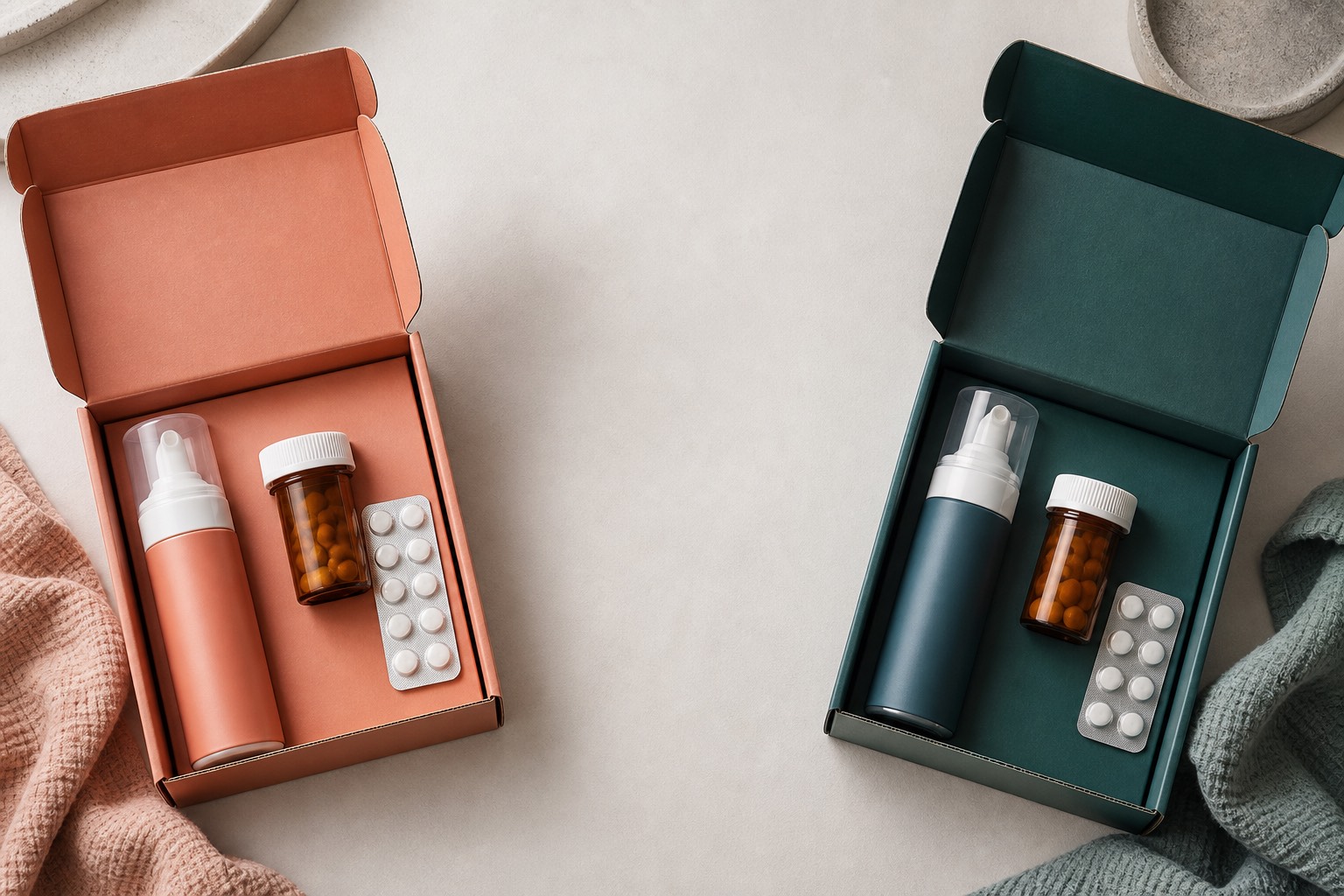
Hims vs Keeps: which one is better for hair loss?
Neither sells a different medicine. Both platforms dispense the same two molecules with real evidence behind them, finasteride 1 mg tablets and 5% topical minoxidil, at the same doses a pharmacy dispenses. So the comparison is not clinical. It is price per 30 days, how much of each range is compounded rather than FDA approved, and what the subscription does when you want out.
Most Hims vs Keeps comparisons declare a winner on price, but that answer goes stale whenever either company reprices. Finasteride 1 mg remains finasteride 1 mg. The durable differences are the consultation model, billing cadence, returns policy and how each platform uses compounded products that the FDA has not approved.
Every figure below comes from a regulator, a federal dataset, an SEC filing or the companies' own published terms, checked on 4 September 2026.
Table of contents
- What Hims and Keeps actually sell
- Hims vs Keeps: the differences that are real
- The number neither site prints: what these drugs cost a pharmacy
- Where the two ranges genuinely diverge: compounded products
- Checking the marketing claims against the label
- Side effects, and who is telling you about them
- Subscription terms: the part that costs people money
- Who each one suits, and when neither is the answer
- Frequently asked questions
What Hims and Keeps actually sell
Both are US telehealth platforms that connect customers to a licensed prescriber and fulfil prescriptions through their own or partner pharmacies. Hims is a public company spanning several health categories, while Keeps is a narrower Thirty Madison brand focused primarily on hair loss. Hims reported approximately 2,511,000 subscribers across its portfolio at the end of 2025 (Hims & Hers 10-K, filed 23 February 2026).
The evidence-backed part of both catalogues is short and identical: finasteride 1 mg tablets, prescription only and FDA approved for male pattern hair loss since December 1997, and topical minoxidil 5% foam or solution, sold over the counter for the same indication. Everything else in either range is a supplement, a cosmetic, a shampoo or a compounded preparation; the evidence behind the best-known of those shampoos is laid out in our look at ketoconazole shampoo for hair loss.
Hims vs Keeps: the differences that are real
The real differences between Hims and Keeps are commercial, not pharmacological: minimum order size, shipping fees, refund rights, geography and how much of the range is compounded. Here is what each publishes about itself.
| Hims | Keeps | |
|---|---|---|
| Core evidence-backed drugs | Finasteride 1 mg, topical minoxidil 5% | Finasteride 1 mg, topical minoxidil 5% |
| Owner | Hims & Hers Health, Inc. (NYSE: HIMS) | Thirty Madison; acquisition by Remedy Meds announced September 2025 |
| Scope | Hair, sexual health, weight loss, dermatology, mental health, labs | Hair loss, plus a newer sexual health range |
| Minimum order | Cadences from 30 to 360 days, billed recurring | All hair products ship as a 3-month supply minimum, or 6 and 12 |
| Shipping | Not published outside checkout; confirm before ordering | $5 per shipment, stated in its own FAQ |
| Returns | Cancel or snooze between billing periods per its terms | "All purchases of Keeps treatments are final"; exchanges only for damaged items within 48 hours |
| Geography | US plus UK, parts of the EU and Canada per its 10-K | US only, no international shipping |
| Compounded items | 503A pharmacies and a 503B outsourcing facility in house | Compounded topicals and multi-drug "chew" and "drop" formulas |
Keeps' minimum order is three months, and its refund and return FAQ states that treatment purchases are final. That is standard for dispensed medication, but it means a problem in week two can leave you with unused product. Hims describes shorter cadences and a cancel or snooze mechanism in its 10-K.
The number neither site prints: what these drugs cost a pharmacy
Finasteride 1 mg cost pharmacies an average of $0.0426 per tablet in the week of 2 September 2026, according to the National Average Drug Acquisition Cost dataset CMS publishes weekly from a national pharmacy survey. That is $1.28 for 30 days, $3.83 for the 90-day supply Keeps ships as its minimum, and $15.55 for a year. Same survey, same week:
| Drug | NADAC per unit | Cost of a 30-day supply at label dose |
|---|---|---|
| Finasteride 1 mg tablet | $0.0426 | $1.28 |
| Minoxidil 5% foam (per gram) | $0.3005 | $18.03 per 60 g can, roughly a month at label dose |
NADAC is pharmacy acquisition cost, not a retail price. Dispensing, overhead, consultation, packaging and support all add legitimate cost. The comparison simply shows how much of a subscription pays for convenience rather than the molecule itself.
Topical minoxidil tilts hardest, because it needs no prescription at all. A pharmacy pays about $18 for a 60 g can of branded generic foam and warehouse multipacks undercut that heavily, as the per gram maths in our guide to Kirkland minoxidil shows. Whether to use foam or solution turns on tolerance rather than potency, covered in minoxidil foam vs solution. Paying a subscription for an over-the-counter product is the easiest line to cut from either plan.
Where the two ranges genuinely diverge: compounded products
The catalogues diverge most in compounded products, including topical finasteride mixtures, multi-ingredient tablets, dutasteride combinations and low-dose oral minoxidil. Compounding is legal and established, but compounded drugs are not FDA approved or reviewed for safety, effectiveness or quality. Hims discloses two licensed 503A pharmacies and a 503B outsourcing facility in its 10-K.
That matters most for topical finasteride, the flagship personalised product on both platforms. There is no FDA-approved topical finasteride in the United States, so every version is compounded at whatever concentration a pharmacy chooses, often mixed with minoxidil. On 22 April 2025 the FDA issued a compounding risk alert after receiving 32 adverse event reports involving compounded topical finasteride between 2019 and 2024, including erectile dysfunction, decreased libido, brain fog, depression and suicidal ideation, most reported as persisting after the product was stopped. The fuller picture, including the phase 3 data on the licensed European spray and the large tolerability dataset published by Hims-affiliated authors, is in our guide to topical finasteride.
Dutasteride and low-dose oral minoxidil are also prescribed off label for hair loss in the US. They are covered separately in dutasteride vs finasteride and oral minoxidil for hair loss. Off label and compounded do not mean unsafe, but they require a more careful prescriber conversation than an FDA-approved tablet with a regulator-reviewed label.
Checking the marketing claims against the label
The "90% effective" figure used across this category comes from a photographic assessment in the Propecia five-year trial, and it counts men whose hair did not visibly change as successes. That assessment method, a 7-point scale scored by an independent panel, is explained in our guide to hair transplant before and after pictures. Keeps states on its own product pages that finasteride is "90% effective at treating hair loss according to clinical studies", and its FAQ says finasteride and minoxidil are "most effective (>90%) at reducing and stopping further hair loss".
Here is the source. In the FDA-approved Propecia label, at five years, 48% of men on finasteride were rated as having increased hair growth and 42% as having no change. Add them and you get 90%. In the placebo group, 6% increased, 19% held steady and 75% were rated as having lost hair.
At five years, the photographic assessment covered 219 men still taking finasteride but only 15 on placebo because most placebo participants had switched treatments during the extensions. The 90% figure is real, but it combines regrowth with no visible worsening. The randomised base was a multinational study of 1,553 men followed through four extensions.
Minoxidil percentages need the same care. The pivotal concentration trial, Olsen et al, J Am Acad Dermatol 2002, reported that 5% solution produced 45% more regrowth than 2% solution at week 48 in 393 men. That was a relative comparison between concentrations, not a claim that someone regrows 45% of all lost hair.
Side effects, and who is telling you about them
Finasteride's randomised side effect rates are small and come with a placebo arm attached. In the trials supporting approval, year one drug-related adverse experiences on finasteride 1 mg versus placebo were decreased libido 1.8% against 1.3%, erectile dysfunction 1.3% against 0.7%, and ejaculation disorder 1.2% against 0.7%, per the label linked above. A checkout screen is not where anyone should be reading them for the first time.
A 2015 JAMA Dermatology review of 34 finasteride trials found inadequate safety reporting across the literature, with 76% assessing safety for no more than a year. The persistent-symptom debate and the European regulator's 2025 review are covered in finasteride side effects.
Topical minoxidil's common problems are local: itching, flaking and irritation, reported at roughly 6% on the 5% solution and driven mostly by propylene glycol in the vehicle rather than by the drug. The full rates, including the risk to cats in the household that almost no consumer page mentions, are in minoxidil side effects.
Two label facts apply whichever platform ships the box. Finasteride is not for women of childbearing potential, and women who are or may be pregnant should not handle crushed or broken tablets because of the risk to a male fetus. And the effect is not banked: "withdrawal of treatment leads to reversal of effect within 12 months", with three months or more of daily use needed before any benefit is visible. That is why this is a subscription category at all.
Subscription terms: the part that costs people money
The recurring bill, not the introductory price, is where a subscription gets expensive. The FTC's "click to cancel" rule was vacated in July 2025, and the Commission has restarted the process through an advance notice of proposed rulemaking. State law and the subscription terms still matter.
Before committing, write down four numbers from the checkout screen:
- Price per 30 days, not per shipment. A 90-day price divided by three is the comparable figure.
- Shipping and consultation fees, which sit outside the headline price. Keeps publishes $5 per shipment.
- The billing cadence and the next charge date. Both bill in advance for a block of product.
- What happens to unshipped product if you cancel. Dispensed medication is generally non-returnable at both.
Divide the annual total by 12 and compare it with a local generic prescription plus over-the-counter minoxidil. The remaining difference is what you are paying for telehealth access, fulfilment and convenience.
Who each one suits, and when neither is the answer
The choice comes down to flexibility and product type. Keeps is narrower and uses a non-refundable three-month minimum. Hims offers shorter cadences, a snooze function and a wider compounded range. If the plan is limited to finasteride 1 mg and topical minoxidil 5%, a local prescription and over-the-counter purchase provide another price comparison.
What neither can do is rebuild a hairline that has already gone. Medication protects what is still there. If you are unsure how far along you are, the Norwood stage finder puts a stage on it in a minute and the finasteride results hub sets out what the drug does at each stage. Men past the point where drugs alone will do the work usually end up pricing surgery instead, which our hair transplant cost calculator breaks down by graft count and country. Surgery does not end the medication either, because transplanted hair is redistributed rather than added and the native hair around it keeps thinning. The same logic disposes of the injectable add-ons sold alongside it, as our comparison of hair transplant vs PRP sets out.
The decision that matters is not which logo ships the box. It is whether an indefinite DHT blocker is right for you at all, and that is a conversation for a dermatologist or a hair restoration physician who can examine your scalp, take a history and follow you up beyond an intake questionnaire.
Frequently Asked Questions
Is Keeps cheaper than Hims?
Historically Keeps has priced individual items lower and Hims has priced bundles better, but both reprice often and neither shows a price until you complete an intake quiz, so any published comparison is a snapshot. Compare price per 30 days including shipping and consultation fees, remembering that Keeps adds $5 per shipment and ships a three-month minimum.
Are the drugs from Hims and Keeps the same as a pharmacy's?
For finasteride 1 mg and topical minoxidil 5%, yes. Both are FDA-approved products dispensed by licensed pharmacies, and finasteride cost pharmacies an average of $0.0426 per tablet in the first week of September 2026 according to CMS acquisition-cost data. The compounded items on both platforms, including topical finasteride, are a different matter: those are not FDA approved and have no regulator-reviewed label.
Can I just get finasteride from my own doctor instead?
Yes. Finasteride 1 mg is a prescription generic that any prescriber can write and any pharmacy can fill, and topical minoxidil needs no prescription at all. The subscription buys the consultation and the logistics, not the medicine.
What happens if I stop taking finasteride or minoxidil?
The Propecia label states that withdrawal of treatment leads to reversal of effect within 12 months, so hair held by the drug is lost over roughly a year after stopping. The same label notes that three months or more of daily use is needed before benefit is observed, which is why both platforms sell in blocks of 30 days or more.
How Bald is an information site, not a clinic. Nothing here is medical advice and we do not sell procedures or medication. Figures are estimates with sources listed on our methodology page. Talk to a dermatologist or hair restoration surgeon before treatment.
More guides
Topical Finasteride: What the Trial and the FDA Alert Both Say
Topical finasteride cut serum DHT by 34.5% in its phase 3 trial. The FDA says absorption into the bloodstream is expected. Both of those are true.
Finasteride Side Effects: The Trial Rates, the Label and the Reports
Finasteride side effects by tier of evidence: what the randomised trials measured, what the label lists, and what the trials were never built to detect.
Kirkland Minoxidil: The FDA Filings, the Ingredient Lists and the Real Cost
Kirkland minoxidil is Perrigo's FDA-approved generic of Rogaine. The solution's ingredient list is identical to the brand. The foam differs by one item.