Scalp Micropigmentation Cost: Course, Touch-Ups and Repairs
Scalp micropigmentation cost in the US: what a full course, touch-ups and a repair cost, and how the bill compares with a hair transplant.

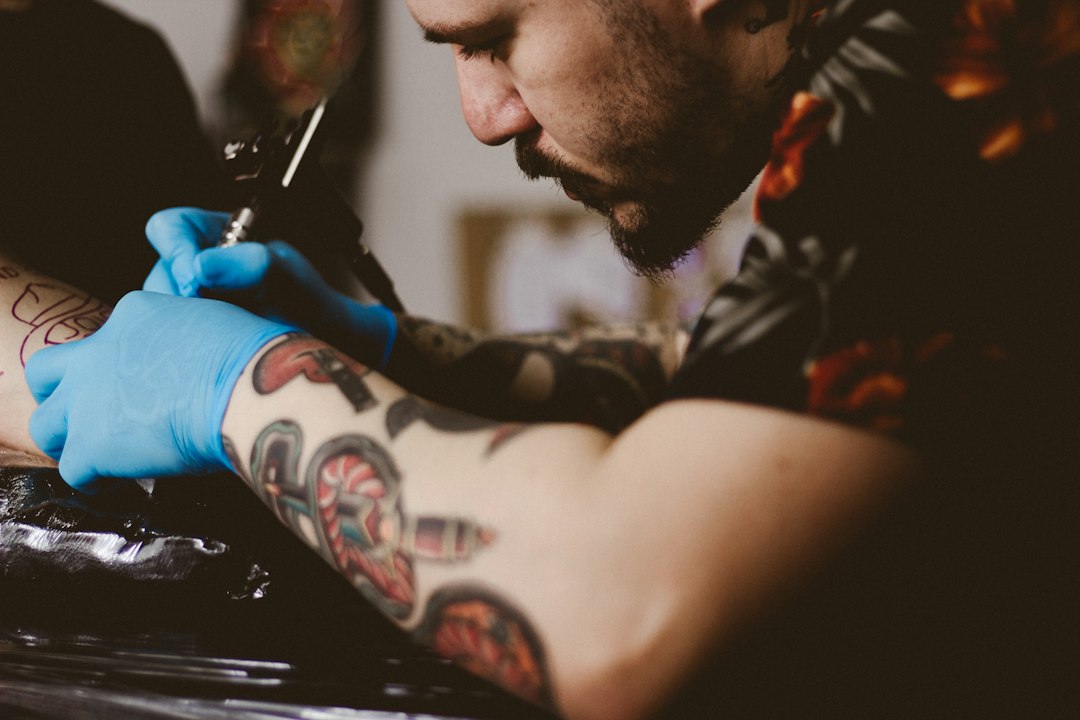
How much does scalp micropigmentation cost?
Published US price lists mostly put a complete scalp micropigmentation course at $2,000 to $5,000, with small hairline or scar jobs from a few hundred dollars and touch-ups from a few hundred to over $1,000. No independent price survey has been published, so these figures come from clinic price lists. The full bill also covers refreshes as the pigment fades, more work if the hair loss keeps going, and laser removal if the result is wrong. A US hair transplant costs more up front; the hair transplant cost calculator prices one by graft count and country.
Scalp micropigmentation cost is quoted as one number, but it is really four: the first course, the touch-ups as the pigment fades, more work if hair loss keeps going, and the cost of fixing or removing it if the result is wrong. Most quotes only cover the first. This guide prices all four from published price lists and the clinical literature, and puts them next to what a hair transplant costs for the same scalp.
SMP is a cosmetic tattoo. Thousands of small pigment dots are placed in the scalp to look like closely shaved hair, or to reduce the contrast between thinning hair and the skin under it. It does not grow hair or slow hair loss, which matters for every number below.
Free 1-page hair transplant quote checklist
Compare graft counts, surgeon involvement, included costs, follow-up and possible second sessions.
Table of contents
- How much scalp micropigmentation costs
- Why there is no reliable average SMP price
- What one course includes
- Touch-ups: how long SMP lasts
- The ten-year scalp micropigmentation cost
- When hair loss keeps going
- Scalp micropigmentation cost vs a hair transplant
- What it costs when SMP goes wrong
- Who is allowed to do it
- Frequently Asked Questions
How much scalp micropigmentation costs
Scalp micropigmentation costs $2,000 to $5,000 for a complete course in the United States, going by published clinic price lists, with most full-scalp work in the middle of that range. One 2026 compilation of current US clinic menus shows how much the size of the job moves the price (ThePricer):
| Job | What the pigment does | Typical published price |
|---|---|---|
| Hairline or temples only | Fills in a receded front or the corners | About $800 to $1,500 |
| Density work under existing hair | Darkens the scalp between hairs so thinning shows less | About $2,000 to $3,600 |
| Full shaved look | Rebuilds a hairline and covers the top and crown on a shaved head | About $2,500 to $4,000 |
| Extensive or complex work | Very large areas, blending far into the sides | About $3,500 to $5,500 or more |
| Scar camouflage | Hides a strip scar or FUE dots in the donor area | About $600 to $2,000; over $3,000 for broad donor work |
| Touch-up | Refreshes faded pigment | A few hundred dollars to over $1,000 |
The size of the job is the main thing that sets the price, and the size of the job tracks the stage of hair loss. A Norwood 3 front needs a fraction of the pigment that a Norwood 7 scalp does, and some clinics set prices by Norwood stage. The Norwood stage finder shows which stage a scalp is at before asking for quotes.
Why there is no reliable average SMP price
There is no reliable average SMP price because no professional body or independent survey has published one. Every US figure in the table above comes from prices that clinics publish themselves. Review sites that collect self-reported costs exist, but those figures are unverified and cannot be checked against receipts.
The peer-reviewed literature hardly helps. The only published SMP price data found for this guide is from a South Korean survey of 131 dermatology outpatients with hair loss. Five of them had had SMP, and they reported paying between 0 and 2,000,000 won, with a mean of 600,000 won. The one who paid nothing had a free "demo" session (Kim and Kim, Ann Dermatol 2025). Five people is an anecdote, not an average.
In practice this means quotes can only be compared item by item. Two price structures account for most of the confusion:
- Per session vs per course. A $900 session sounds cheaper than a $3,000 package until the course needs four sessions: $900 × 4 = $3,600.
- Per area vs per head. A "hairline" price and a "full scalp" price are different jobs. Ask which area the quote covers and whether the crown and the blend into the sides are included.
What one course includes
One SMP course is usually two to five sessions, because the pigment is built up in layers rather than placed all at once. A 2025 case series describes the usual protocol for extensive hair loss as three to five sessions five to seven days apart. Its own protocol started at 40 dots per cm², raised that to 60 at the second session, and finished at 80 to 100 (Liu et al, J Cosmet Dermatol 2025). A Turkish series of 22 patients used three weekly sessions plus a fourth touch-up a month later as standard (Seyhan and Kapi, J Craniofac Surg 2021). Clinics vary the gap between sessions from a week to several weeks.
That makes the extra-session price the most useful single line in a quote. These are the items worth getting in writing:
- How many sessions the price includes, and what each extra session costs
- Whether a touch-up after healing is included, and until when
- Whether the consultation fee and any numbing are included
- Whether the deposit can be refunded
- What happens if the pigment heals lighter or patchier than expected
- What pigment is used, and whether needles are single-use
Touch-ups: how long SMP lasts
Scalp micropigmentation usually keeps its look for about four years or longer, according to Cleveland Clinic, after which fading can make a touch-up worthwhile. The published follow-up is much shorter than that.
| Study | Patients | Follow-up | What happened to the pigment |
|---|---|---|---|
| Dhurat et al, J Cutan Aesthet Surg 2017 | 45 | Not fixed | Notes "slight fading of pigment" over 8 to 10 months "that might warrant a repeat procedure" |
| Seyhan and Kapi, 2021 | 22 | 7 to 32 months, mean 20 | "Minimal" fading |
| Liu et al, 2025 | 10 (5 followed to 6 months) | 6 months | Visual density score averaged 8.7 out of 10 right after treatment (all 10) and 7.7 at 6 months (the 5 followed); scarring alopecia faded more than pattern hair loss |
None of these studies follows SMP for more than about three years. The Liu authors say all micropigmentation fades over time, from pigment being carried away to the lymph nodes, breakdown by enzymes, and sunlight, and that colour changes caused by sunlight usually show up only after six months. In other words, "four years or longer" is not backed by multi-year follow-up in these published series. For budgeting, it is safer to assume at least one touch-up within the first five years.
The ten-year scalp micropigmentation cost
The ten-year scalp micropigmentation cost is the first course plus the number of touch-ups times what each one costs, and the touch-up gap changes the total more than the touch-up price does. The table below is arithmetic for illustration, not a forecast. It assumes a $3,000 first course (the middle of the published range) and touch-ups at $300 or $800.
| Touch-up every | Touch-ups in ten years | At $300 each | At $800 each |
|---|---|---|---|
| 5 years | 2 (years 5 and 10) | $3,600 | $4,600 |
| 4 years | 2 (years 4 and 8) | $3,600 | $4,600 |
| 3 years | 3 (years 3, 6 and 9) | $3,900 | $5,400 |
| 2 years | 5 | $4,500 | $7,000 |
The two-year row is there because fading is faster in some people, on scar tissue and with a lot of sun, and no study has measured how often that happens. Even so, the total stays in the low thousands of dollars as long as the first result is good and the hair loss stops where it is. Neither of those is guaranteed, and the two sections below price what happens when they fail.
When hair loss keeps going
SMP does not slow hair loss, so a design that fits the scalp today can stop fitting it as the hair keeps thinning. That is the cost most quotes leave out. A hairline-only job done at Norwood 3 leaves a bare band behind the new line if the loss moves on to Norwood 5, and the fix is more SMP over a bigger area, priced as new work. Density SMP under longer hair has the same problem: if the hair around the dots thins, the dots show, and the choices are to extend the design or to shave down to the shaved-head look.
No study has measured how often an SMP design needs extending. The risk is largest in younger men whose pattern is still moving, which is also when the two approved medicines are usually discussed. Finasteride is the usual first-line option for men. In its first-year trials, decreased libido was reported by 1.8% of men on finasteride against 1.3% on placebo, erectile dysfunction by 1.3% against 0.7%, and ejaculation disorder by 1.2% against 0.7%. The label also lists sexual side effects that persisted after stopping, depression and suicidal ideation, from reports after approval, and finasteride is not used by women who could become pregnant (Propecia label, DailyMed). The finasteride side effects guide explains how those rates were measured. Topical minoxidil's main side effects are scalp itching and irritation, which were more common on the 5% strength than the 2% in a 48-week trial of 393 men (Olsen et al, J Am Acad Dermatol 2002). More detail is in the minoxidil side effects guide.
Diagnosis matters too. Cleveland Clinic lists alopecia areata as a condition SMP can camouflage, but hair can regrow in alopecia areata. One case report describes a 56-year-old woman with alopecia universalis who had a full-scalp tattoo, noticed hair growing back a month after it was finished, and went on to complete scalp regrowth; the authors think a link is likely but cannot prove it, and note the hair may have regrown without the tattoo (Ramnot et al, JAAD Case Rep 2023). Paying for permanent pigment makes most sense once the cause of the hair loss has been confirmed.
Scalp micropigmentation cost vs a hair transplant
Scalp micropigmentation costs less up front than a hair transplant in the US, but it is not a cheaper version of the same thing: SMP adds colour, a transplant moves hair. The comparison that surprises people is with medical tourism. A US SMP course costs about the same as a Turkish transplant package before flights.
| SMP, US | Hair transplant, US | Hair transplant, Turkey | |
|---|---|---|---|
| Typical first bill | $2,000 to $5,000 (published price lists) | $8,000 to $20,000 for 2,000 to 3,000 grafts | $2,000 to $5,000 package, plus $400 to $1,200 return flights from the US |
| What you get | The look of shaved hair or more density | Hair that grows and can be worn long | Same, with aftercare once you fly home |
| Uses donor hair | No | Yes, from a limited lifetime supply | Yes |
| Hairstyle afterwards | Mostly short on the treated area | Any length the density allows | Any length the density allows |
| Future costs | Touch-ups; more work if loss progresses | Often a second session; medication to protect native hair | Same, plus a second trip |
| Can it be undone | Laser removal, often in several sessions | Grafts can be removed, but extraction scars remain | Same |
The transplant prices are the typical ranges on the US cost page and the Turkey cost page, which also list what each price leaves out.
The two procedures are often combined rather than chosen between. Rassman and colleagues, whose clinic offers both, describe adding SMP to a smaller FUE session so that fewer grafts are needed in men with advanced loss and limited donor hair, at a lower overall cost (Rassman et al, Plast Reconstr Surg Glob Open 2017). In a study of 40 women with female pattern hair loss, those who had chosen SMP had more native hair than those who had chosen a transplant (a mean of 116 against 96 hairs/cm²). The authors suggest SMP above about 105 hairs/cm² and a transplant at 96 or below (Park et al, J Cosmet Dermatol 2024). That is one retrospective study, but the logic holds: density SMP needs enough hair left to blend into. Whether the larger surgical bill is good value is covered in is a hair transplant worth it.
What it costs when SMP goes wrong
When SMP goes wrong, fixing it often costs more than the first course, and a hair transplant was the most common fix in the largest published series. A Seoul study reviewed 120 patients treated for unsatisfactory SMP (Park et al, Int J Dermatol 2025):
| Where the bad SMP was done | Share of the 120 |
|---|---|
| Tattoo or permanent-makeup facility at a beauty salon | 89.2% |
| Another clinic | 10.0% |
| Oriental medicine clinic | 0.8% |
| How it was fixed | Patients |
|---|---|
| Hair transplant to cover the tattoo | 74 (61.7%) |
| Hair transplant plus new SMP | 25 (20.8%) |
| Laser removal, then new SMP | 16 (13.3%) |
| Laser removal only | 5 (4.2%) |
Two caveats apply. The authors work at surgical and dermatology clinics, so patients who wanted surgery were more likely to end up in their series. And the paper does not say how many SMP procedures go wrong, only what happened to people who sought repair. Still, it describes badly done SMP as "exceedingly challenging to rectify". The complications reported across the literature are an unnatural look, blurring where pigment spreads, colour changing over time, and allergic reactions, which affected 1 of the 22 patients in the Turkish series. Cleveland Clinic adds infection from unsterilised needles and says people prone to keloid scars should not have SMP.
Laser removal is the other route, and the number of sessions is what makes it expensive:
| Removal route | Sessions | What the evidence says |
|---|---|---|
| Picosecond 1064 nm laser | 1 to 3 | SMP cleared in all 4 patients of one case series (Wu, Lasers Surg Med 2020) |
| Nanosecond Nd:YAG laser, several wavelengths | Not stated (the PubMed record has no abstract) | A case report titled as colour change followed by complete removal (Hobayan and Shipp, Dermatol Surg 2026) |
| Laser tattoo removal in general | 5 to 10, sometimes up to 20, six to eight weeks apart | "It may not be possible to completely remove all the ink" (UCSF Health) |
The American Society of Plastic Surgeons gives $697 as the average cost of laser skin treatments such as tattoo removal, excluding related expenses, and does not say whether that is per session (ASPS). As an illustration only: one to three sessions at that figure is about $700 to $2,100, and five to ten sessions is about $3,500 to $7,000, before any new SMP or surgery. A transplant used to cover a tattoo is priced like any other, by graft count. The same "what does the fix use up" question runs through hair transplants gone wrong.
Who is allowed to do it
Who is allowed to do scalp micropigmentation depends on the country, and in the US and UK it is generally regulated as tattooing rather than as a medical procedure. That is part of why prices vary so much: a hospital dermatologist and a tattoo studio can both offer SMP.
- United States. The FDA treats tattoo inks as cosmetics and has not approved any colour additive for injection into the skin (Verity et al, J Law Biosci 2024). Tattooing itself is regulated by state governments and local health departments, so the rules differ from place to place (Rassman et al, J Clin Aesthet Dermatol 2015). Words like "medical-grade pigment" describe a product, not an FDA approval.
- England. Outside London, councils register micropigmentation as "semi-permanent skin colouring" under the Local Government (Miscellaneous Provisions) Act 1982, and both the practitioner and the premises need a licence, as Colchester City Council sets out.
- South Korea. Only licensed medical professionals may legally do SMP. Even so, all five SMP recipients in the Korean survey above had it done in non-medical settings.
What a reader can check is the same everywhere: the practitioner's licence or council registration, healed results photographed well after treatment rather than on the day, and the written price for an extra session or a correction. For SMP over transplant scars, the hair transplant scars guide covers what pigment can and cannot hide.
Health insurance generally treats SMP for pattern hair loss as cosmetic, the same as a transplant, so it is normally paid out of pocket; the insurance and HSA guide sets out where the rules differ. A payment plan for SMP raises the same questions as one for surgery, and the hair transplant financing guide shows what a deferred-interest card costs if the promotional period runs out.
Frequently Asked Questions
How much does scalp micropigmentation cost for a receding hairline?
Hairline or temple work alone is usually priced at about $800 to $1,500 on published US price lists, well below a full-scalp course. The risk is that a hairline-only design leaves a bare band behind it if the loss moves further back, so it helps to ask what extending the design would cost later.
How long does scalp micropigmentation last before a touch-up?
Cleveland Clinic says SMP usually keeps its look for four years or longer. Published case series follow patients for less than three years, report some fading within months, and find more fading on scar tissue, so a budget that includes at least one touch-up within five years is the cautious one.
Is SMP cheaper than a hair transplant?
Up front, yes: a US SMP course of $2,000 to $5,000 costs a fraction of a typical US transplant, and about the same as a Turkish transplant package before flights. Over time SMP needs touch-ups and may need more work as hair loss progresses, while a transplant often needs a second session, so neither is a one-off cost.
Can scalp micropigmentation be removed, and what does it cost?
Yes, usually with laser. A picosecond laser case series cleared SMP in one to three sessions, while tattoo removal in general can take five to ten sessions or more and may not remove every trace of ink. In a series of 120 people who sought repair for bad SMP, most had a hair transplant to cover it rather than laser removal alone.
Before you pay
The cheapest SMP quote is not the cheapest SMP. The cheapest SMP is a course done once, well, on a scalp whose hair loss has stopped moving and been properly diagnosed. Patchy loss, hair loss with itching or burning, or a hairline that is moving quickly belongs with a dermatologist before any pigment goes in, and anyone weighing SMP against surgery will get a more useful answer from a hair restoration surgeon or dermatologist who examines the donor area than from a price list.
How Bald is an information site, not a clinic. Nothing here is medical advice and we do not sell procedures or medication. Figures are estimates with sources listed on our methodology page. Talk to a dermatologist or hair restoration surgeon before treatment.
More guides
Hair Transplant Gone Wrong: What Is Fixable and What Isn't
Hair transplant gone wrong? When a result can be judged, which failures can be repaired, what each repair uses up and the records to request first.
Is Hair Transplant Worth It? What the Satisfaction Data Shows
Is hair transplant worth it? The published satisfaction scores, the lifetime cost multiplier, and the eight cases where surgeons say no.
Hair Transplant Financing: Do the Math Before You Sign
Hair transplant financing usually means a deferred interest medical card. What the promotional period really costs if you miss it, priced out in full.